
In January 2026, India’s higher education ecosystem found itself at the centre of a national debate that has turned campuses, social media, newsrooms and court corridors into arenas of intense discussion. At the heart of this unfolding drama is a set of freshly notified regulations by the University Grants Commission (UGC) known as the Promotion of Equity in Higher Education Institutions Regulations, 2026. Manifesting the lofty ideal of ending discrimination and building inclusive universities, the regulations instead triggered protests, legal challenges and heated political and academic debate within days of their release of UGC equity rules.
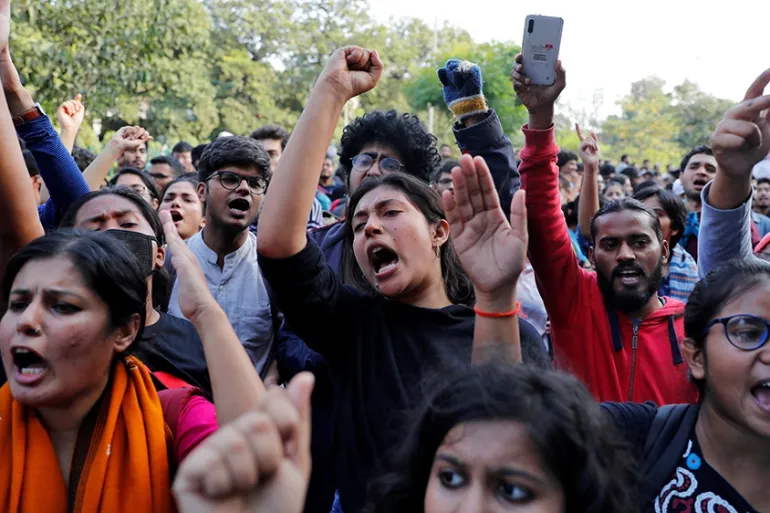
What began as an administrative update has swiftly snowballed into one of the most talked-about issues in Indian education in recent memory, raising broader questions about equality, fairness, due process and the pulse of student politics in India today.
What Are These New UGC Equity Rules All About?
At its core, the 2026 regulations represent an attempt to shift India’s anti-discrimination framework in higher education from advisory to compulsory. Earlier anti-discrimination mechanisms under the 2012 UGC rules were largely deemed toothless and lacked rigorous enforcement machinery. The new rules, by contrast, seek to create structures with accountability and timelines for action.
Under the new framework:
- Every higher educational institution like universities, colleges and deemed universities must establish an Equal Opportunity Centre (EOC) to be a focal point for redressal of equity concerns, primarily caste and other forms of discrimination. These centres are tasked with receiving complaints, guiding students, conducting awareness programmes and reporting outcomes.
- Every institution must also constitute Equity Committees and Equity Squads, groups charged with monitoring campus life, supporting victims, and tackling discriminatory behaviour through both proactive measures and grievance redressal.
- A round-the-clock Equity Helpline is to be set up to make it easier for anyone to report discrimination or harassment. Helpline operators are expected to maintain confidentiality when requested and ensure prompt escalation of serious complaints.
- Institutions are required to meet specific timelines: complaints must be acknowledged quickly, examined by committees, and reports submitted to UGC often within tight deadlines measured in days rather than weeks.
- Bi-annual reports detailing demographic data, complaints received, actions taken and campus equity outcomes must be submitted by each institution and shared with UGC for central oversight.
If fully implemented, this ensemble of committees, ambassadors, helplines and compliance measures would mark a new era of regulated campus conduct one where equity is not just an ideal, but a bureaucratically monitored reality. UGC and defenders of the rule say it will finally fill the enforcement gap that allowed structural discrimination to fester for years.
The Rationale Behind The Push
Supporters of the regulations point to stark trends that underline why reform was considered necessary. Official data submitted to legislative bodies and court filings reveal a near doubling of caste-based discrimination complaints over the past five years, rising from around 173 cases in 2019-20 to over 350 in 2023-24.
For many activists and educators, the new rules represented a long-overdue structural response to persistent inequities on campus from subtle exclusion and biased pedagogy to outright harassment and casteist violence. These advocates argue that without mandatory committees, clear timelines and accountability measures, discrimination remains intangible and under-reported.
In this light, the 2026 regulations are seen by some as transformative: finally equipping institutions with the mandate and machinery to act rather than merely exhorting them to do the right thing.
Why The Row Erupted So Fast After UGC Equity Rules
Despite these intentions, the response to the regulations was swift and fierce but not universal. As soon as UGC notified the regulations on January 13, 2026, protests began to flare across campuses, especially in states like Uttar Pradesh and Delhi. Students, often identifying themselves as “general category” or unreserved, interpreted key parts of the regulations as discriminatory against them.
At protests outside the UGC headquarters in Delhi and on campuses such as Lucknow University, students raised slogans, staged sit-ins, and demanded a rollback or revision of the norms, calling them vague, arbitrary, and potentially harmful. Critics have said that:
- The regulations do not clearly provide mechanisms for general (unreserved) category students to raise their own complaints.
- The definitions and procedures are too broad and vague, risking misuse, false accusations and reputational harm to innocent students.
- The rules could create a climate of fear and surveillance on campuses, with Equity Squads and ambassadors monitoring behaviour in ways that feel intrusive.
- There are no explicit safeguards against malicious or false complaints, which critics argue could lead to witch hunts or divisive campus politics.
In several locations across Uttar Pradesh, student groups and local outfits like Karni Sena and Savarna Sena joined protests, alleging the rules amount to reverse discrimination and “anti-general category” bias. Some college employees and local politicians even resigned in protest, further politicising the issue.
Government And Institutional Responses
Reacting to the uproar, Union Education Minister Dharmendra Pradhan addressed crowds and the media, offering public assurances that the regulations would be implemented fairly and would not be misused against anyone. He reiterated that all actions were rooted in the Indian Constitution and subject to oversight.
The government’s position emphasises that the regulations are simply an extension and enforcement of constitutional guarantees and that concerns around misuse can be managed through proper institutional safeguards. Supporters within several student organisations like the National Students Union of India (NSUI) have organised signature campaigns emphasising the benefits of transparency, quality and protection for marginalised groups.
Meanwhile campus groups such as Akhil Bharatiya Vidyarthi Parishad (ABVP) have publicly urged more clarity and balanced implementation, even as they endorse the rule’s central aim of combating discrimination.
The Legal Battle Begins
As protests continued, opposing voices took the fight to India’s highest court. Multiple petitions challenging the 2026 regulations have been filed in the Supreme Court of India. Petitioners argue that the definitions used for caste-based discrimination are “non-inclusionary” because they specifically reference discrimination only against Scheduled Castes, Scheduled Tribes and Other Backward Classes potentially excluding other categories.
The Supreme Court has acknowledged the matter and agreed to hear these pleas, marking a significant escalation that could shape the future of educational policy. Judicial scrutiny now looms large, and legal outcomes could determine how the regulations are interpreted or amended going forward.
Politics, Policies And Fault Lines
This controversy has not stayed confined to campuses or classrooms. Analysts say that it has cut deep into India’s political landscape, exposing tensions over caste identities, affirmative action and electoral strategies. Some commentators argue that the government finds itself navigating a sensitive social fault line balancing constitutional commitments to social justice with the anxieties of communities who see themselves as disadvantaged by the new rules.
Interestingly, at least one major national party’s state unit has opted for public silence, possibly wary of alienating either upper-caste or backward-class constituencies as elections approach. This political calculus further underscores how an educational regulation has become central to broader discussions about societal equity and political power.
Voices From The Ground
On the ground, students and faculty offer contrasting narratives that mix fear, hope, confusion and aspiration. Some student protesters articulate real concerns about procedural fairness and fear of reputational damage; others question whether free speech and academic exchanges will survive under constant monitoring. Meanwhile, supporters including those from historically marginalised groups insist that stronger measures are necessary because subtle and overt discrimination has long gone unchecked.
Academics and commentators note that the intensity of reactions also reflects deeper anxieties about caste relations, representation and access to opportunity in a country still grappling with deeply embedded social hierarchies. For many, this debate is not merely administrative but existential about how India envisions justice, merit and equality in its intellectual spaces.
What Happens Next?
With Supreme Court hearings on the horizon, protests persisting on campuses and political positioning intensifying, the UGC equity controversy is far from settled. The court’s interpretation of the regulations’ definitions, safeguards, and procedural fairness could reshape the rules or mandate revisions. At the same time, public discourse is likely to remain active, with student bodies, civil society, political parties and educational institutions all staking claims in how India defines equity in higher education.
Also Read: Grok AI is The Bright Future of AI-Powered Conversations and Creativity
Whether the 2026 regulations succeed in their original aim of reducing discrimination or whether they are amended, suspended or scrapped in the process will depend on how these multifaceted pressures play out in the weeks and months ahead.
Frequently Asked Questions (FAQs)
Q1. What triggered the protests against the UGC’s 2026 equity regulations?
The protests were primarily sparked by concerns that the new rules lack mechanisms for general category students, have vague definitions, and could be misused without strong safeguards against false complaints. Many students and groups demanded clarity or rollback.
Q2. What do the new regulations require institutions to do?
Under the 2026 rules, colleges and universities must establish Equal Opportunity Centres, Equity Committees and helplines to receive and act on discrimination complaints, following specific timelines and reporting structures.
Q3. Why is the Supreme Court hearing petitions on these rules?
Petitions challenge the regulations on the grounds that their definition of caste-based discrimination is “non-inclusionary” and that they exclude protections for some categories, potentially violating constitutional principles.
Q4. Has the government responded to the uproar?
Yes. Union Education Minister Dharmendra Pradhan has publicly assured that the regulations will be implemented fairly, are constitutionally sound and will not be misused or discriminate against any group.
Q5. Are all students opposed to the new rules?
No. Some student organisations, including left-leaning groups and those representing historically marginalised communities, support the regulations and argue they are necessary to make campuses truly inclusive and accountable.