
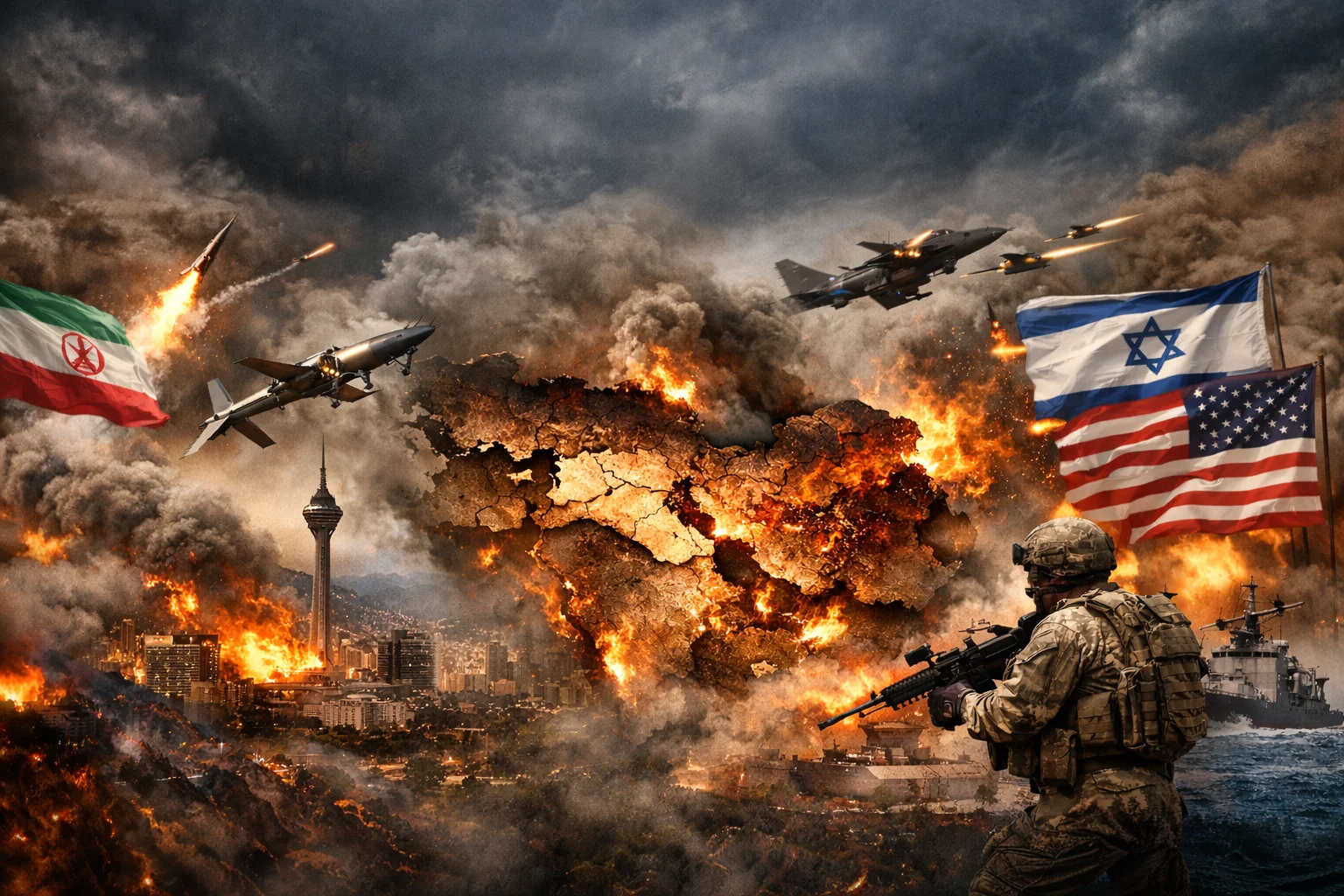
The Middle East has long lived with tension as a constant undercurrent. Rivalries have simmered, alliances have shifted, and confrontations have often played out indirectly through proxy forces and covert operations. Yet recent direct military strikes between Iran, Israel, and the United States mark a sharp and dangerous turn in the Middle East war.
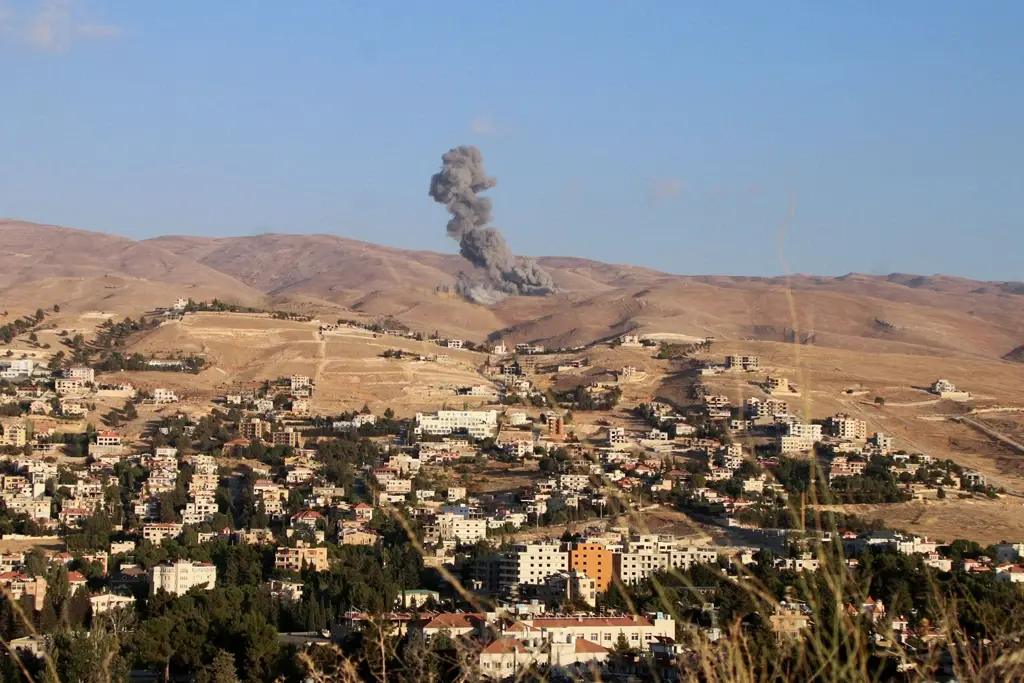
The central question now being asked in capitals across the world is simple but unsettling: Is this the beginning of a wider Middle East war?
To answer that, we must examine how this moment was built, what makes it different from previous crises, and what risks lie ahead.
From Shadow Conflict To Open Confrontation
For years, Iran and Israel have engaged in what analysts often called a “shadow war.” This included cyberattacks, targeted assassinations, covert operations, and strikes on proxy forces in Syria and elsewhere. The United States has also maintained pressure on Iran through sanctions, military presence, and support for Israel.
The recent escalation represents a shift from indirect confrontation to overt military action. Direct strikes on Iranian territory, followed by missile and drone retaliation, have moved the conflict into a new phase. When major states strike each other openly, the margin for miscalculation narrows dramatically.
This is no longer confined to intelligence operations and limited skirmishes. It carries the visible weight of state-to-state warfare, making it a Middle East war.
The Core Drivers Of The Crisis
Several overlapping factors have contributed to this escalation:
1. The Nuclear Question
Iran’s nuclear programme has long been a central point of contention. Israel views the possibility of a nuclear-armed Iran as an existential threat. The United States shares concerns about nuclear proliferation and regional destabilisation. Diplomatic efforts to contain or reverse Iran’s nuclear advancements have repeatedly faltered, deepening mistrust.
When diplomacy stalls, the temptation to act militarily often rises.
2. Regional Influence And Power Balance
Iran has expanded its regional influence through alliances and proxy groups in Lebanon, Syria, Iraq, and Yemen. Israel considers many of these groups direct security threats. The United States maintains strategic interests in preserving a balance of power that protects its allies and secures energy routes.
This struggle for regional dominance forms the structural backbone of the conflict. It is not merely about one strike or one policy dispute. It is about who shapes the Middle East’s future security architecture.
3. Domestic Political Pressures
Leaders involved in the conflict also face domestic pressures. National security crises often harden political positions. Public opinion, internal power dynamics, and leadership calculations can all influence the willingness to escalate or de-escalate.
In moments like these, political incentives sometimes favour strength over compromise.
What Makes This Middle East War Particularly Dangerous?
The Middle East has seen wars before. However, several factors increase the risk that this escalation could spread.
Direct US Involvement
When the United States becomes directly engaged in military operations, the stakes expand significantly. American military assets across the Gulf region become potential targets. Retaliation can ripple outward quickly, drawing in additional actors.
Risk Of Multi-Front Expansion
Iran has relationships with armed groups across the region. If those groups become more actively involved, the conflict could spread into Lebanon, Syria, Iraq, or Yemen. Israel could face multiple theatres of confrontation simultaneously.
Similarly, attacks on US bases or regional allies could widen participation beyond the initial three actors.
Energy And Global Markets
The Middle East remains central to global energy supply. Any threat to oil shipping routes or production facilities can cause sharp price spikes. Energy disruptions would not remain regional. They would affect inflation, markets, and political stability worldwide.
Economic shocks can amplify geopolitical crises, creating feedback loops that are difficult to contain.
Superpower Friction
Global powers such as Russia and China have strategic interests in the region. While they may not directly intervene militarily, diplomatic alignments and political positioning can deepen global divisions. Increased rivalry between major powers complicates peace efforts and increases long-term instability.
Could This Become A Full-Scale Regional War?
In this Middle East war, several scenarios are possible.
Scenario 1: Controlled Escalation
Both sides exchange limited strikes but avoid targeting infrastructure that would trigger total war. Diplomatic channels quietly reopen. Tensions remain high but stabilise. This would resemble previous crises where brinkmanship stopped short of regional collapse.
Scenario 2: Prolonged Regional Conflict
Retaliation expands. Proxy groups intensify attacks. Civilian casualties mount. Air and missile exchanges become routine. The conflict spreads geographically without becoming a world war, but the Middle East enters a prolonged period of instability.
This scenario would strain economies, deepen humanitarian crises, and reshape regional alliances.
Scenario 3: Major War With Global Impact
If critical infrastructure is struck, or if miscalculation leads to mass casualties, the conflict could spiral rapidly. A blockade of strategic waterways, widespread missile campaigns, or large-scale ground operations could follow. At that point, global economic shock and diplomatic fractures would intensify.
While this remains the most extreme possibility, it cannot be dismissed entirely.
The Human Dimension Often Overlooked
Beyond strategic calculations lies the human cost. Civilian populations bear the brunt of escalation. Air strikes, missile attacks, and economic sanctions disrupt daily life, damage infrastructure, and create displacement.
Hospitals, schools, power grids, and supply chains suffer. Even limited wars produce long-lasting humanitarian consequences.
The longer a conflict persists, the harder recovery becomes.

What Could Prevent A Wider War?
Despite the risks, this Middle East war escalation is not inevitable.
Backchannel Diplomacy
Even during open conflict, states often communicate through indirect diplomatic channels. Quiet negotiation can help define red lines and prevent unintended escalation.
International Mediation
Regional actors such as Gulf states or global institutions can push for ceasefire frameworks. External pressure sometimes creates space for de-escalation when direct talks stall.
Strategic Restraint
Military planners are often aware of the catastrophic cost of total war. Calculated restraint, even after retaliation, can signal limits and prevent runaway escalation.
History shows that wars sometimes stop not because grievances disappear, but because leaders recognise the cost of continuing.
Middle East War, So, Is This The Beginning?
It may be more accurate to say this is a crossroads.
The Middle East stands at a pivotal moment where limited conflict could harden into something far larger. Whether it does depends on political decisions made in the coming weeks and months.
Escalation is built step by step. So is de-escalation in this Middle East war.
The region has experienced cycles of confrontation before, but each cycle reshapes the strategic landscape. What makes the present moment critical is the directness of the strikes and the visibility of retaliation. The line between deterrence and disaster has become thinner, causing a Middle East war.
The world is watching, not merely out of concern for one region, but because the consequences would not remain confined to it.
Also Read: What is the Bleeding Eye Virus? Causes, Symptoms, Prevention, and Treatment
The question is not only whether a wider Middle East war will begin. It is whether restraint can prevail before momentum overtakes diplomacy.
Frequently Asked Questions (FAQs)
1. Why did the conflict escalate now?
Breakdown in nuclear diplomacy and rising regional tensions triggered direct military strikes.
2. Is this officially a declared war?
Not formally declared by all sides, but active military exchanges are ongoing.
3. Could other Middle Eastern countries get involved?
Yes, especially if attacks expand or proxy groups enter the conflict.
4. How could this affect global oil prices?
Disruption to energy routes could cause significant price increases worldwide.
5. Is there still a chance for de-escalation?
Yes. Diplomatic intervention and strategic restraint could prevent wider war.