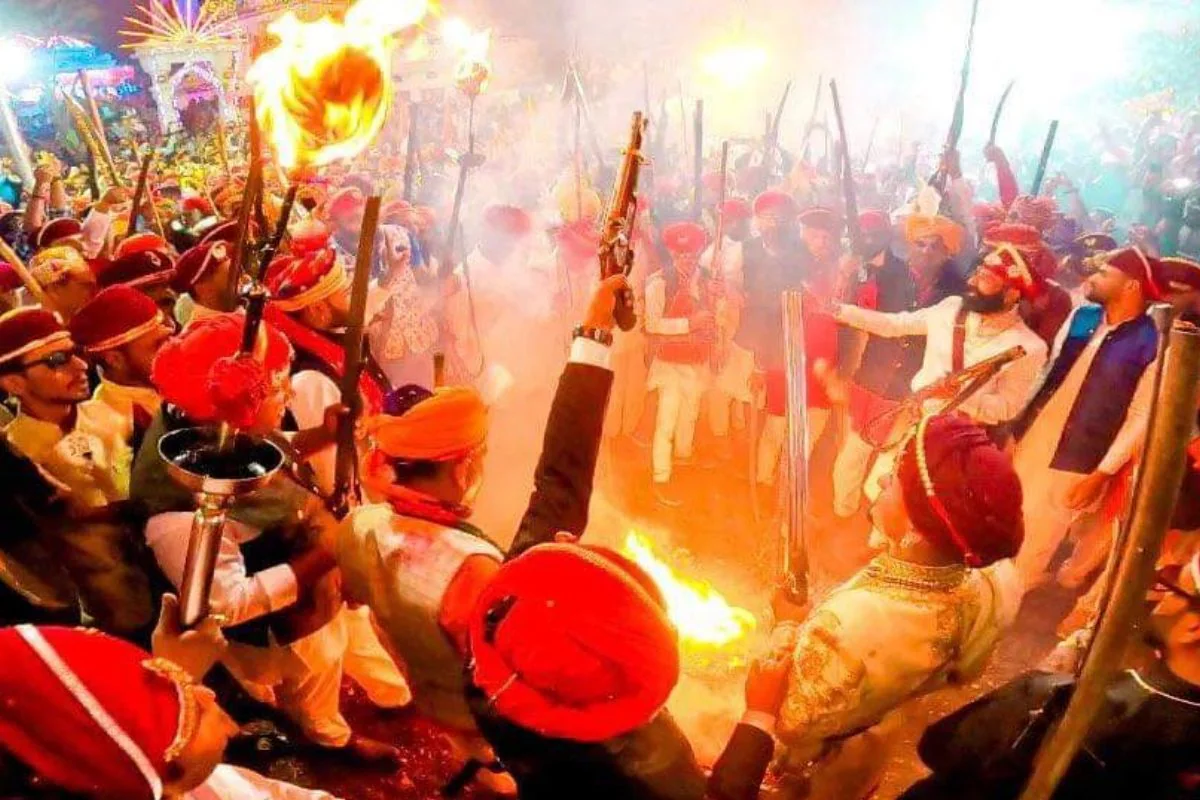
Holi, the festival of colours, has been a great event of frolic and fun in India. Celebrated with full enthusiasm and fun, Holi is an epitome of colours, sweets and laughter. But in the brave land of Rajasthan, Holi has its own version, “Gunpowder Holi” and is celebrated with not colours but “gunpowder and swords” in Menar, a small village near the beautiful city of Udaipur.
The celebration of this unique Holi is marked in remembrance of the historical victory of the villagers and common people of Mewar over the tyrannical and invading forces of the Mughals.
In addition to this, it is also a display of power and proud identity of the local rural residents, paying tribute to their brave ancestors. This celebration is one of its kind in India and the world.
The Glorious History and Pride of Mewar
Mewar, a name synonymous with the bravery of Maharana Pratap and Maharana Sanga, is a land of bravery, self-respect and loyalty to the motherland. Being one of the well-known kingdoms of Rajputana history and valour, Mewar holds a major part in the resistance against foreign and Islamic invasions. The constant struggle with the Mughals and not giving up their pride against the Mughal rule has been an inspiration for the generations.
During the period of the Mughal Empire in India, Mewar possessed a major force which not only raised its voice against their rule but also denied their dominance. This led to a famous struggle for self-respect and freedom that is known as “Battle of HaldiGhati” and “Battle of Diwer”. The victory of Maharana Pratap and his forces against the well-equipped Mughal army of Akbar and his commander, Mirza Jai Singh, is well etched in history.
After the untimely demise of Maharana Pratap in the year 1597, the Mughals thought of recapturing the areas of Mewar and established their army camps known as Chowki. One such camp was established near Udaipur, in the village of Mewar. This Mughal outpost was made to restrict the access of ration and ammunition in Mewar and to collect Mehsul (land tax) from the villagers.
Overwhelmed by the atrocities and constant attack by the Mughal emperor’s army, the residents of Menar, who were majorly brahmins and were from the priestly class and farmers, inspired by Shri Parshurama, the warrior god, on the day of Jamra Beej (two days after the festival of Holi), took up arms and attacked the Mughal outpost. A fierce battle ensued, and there were heavy casualties on both ends, ultimatly the brahmins of Menar were successful in such a great success that the Mughal army had to flee from the battlefield.
The Maharana, recognising their bravery, bestowed them with many titles and the honour of a turban and ornament (a major honour is Rajputana). To commemorate the victory of Mewar over the Mughal forces and to pay tribute to the bravery of their ancestors, the villagers of Mewar still intact the war scene and play Holi with crackers, gunpowder, swords and sticks, dressed in traditional warrior attire.
The Cultural Impact
The Gunpowder Holi or “Barood ki Holi” that is celebrated in the Village of Menar, Udaipur, is well etched in the history of Mewar and Rajasthan. This instance of common people and farmers taking up arms and revolting against the tyranny of the barbaric Mughal commanders is well regarded within the country. Heavy fireworks, guns, and swords are displayed, and then Gaer (Rajasthan’s Martial Dance) is performed. The whole environment is filled with bravery, enthusiasm and battle cries.
In the present time, the event is a major tourist attraction and is visited by a number of tourists and social media influencers. The event is the best opportunity to witness the chapters of bravery in the history of Rajasthan. The event is well covered by many social media influencers and content creators.
Also Read: “Do me a favour and play safe Holi”: Skin and Hair care while and after playing Holi
Besides this, it is also an important day where people of the community come together and celebrate the courage, valour, sacrifice, and their ancestors’ love towards their motherland. The local people still celebrate the “barood ki holi” wearing colourful paag, achkans and get adorned by swords and other weapons.
Frequently Asked Questions (FAQs)
Q1. What is Gunpowder Holi?
Gunpowder Holi, also known as Barood Ki Holi, is a unique Holi celebration in Menar village near Udaipur where villagers commemorate a historic victory using gunpowder, swords and martial performances instead of colours.
Q2. Where is Gunpowder Holi celebrated?
It is celebrated in Menar village, located near the city of Udaipur in the Mewar region of Rajasthan.
Q3. Why is Gunpowder Holi celebrated in Menar?
The festival commemorates the victory of Menar’s villagers over a Mughal military outpost, honouring the bravery and sacrifice of their ancestors.
Q4. When does the celebration take place?
The event is celebrated on Jamra Beej, which falls two days after the festival of Holi.
Q5. What activities are part of Gunpowder Holi?
The celebration includes gunpowder fireworks, mock battle displays with swords and sticks, and the traditional martial dance known as Gair Dance.