
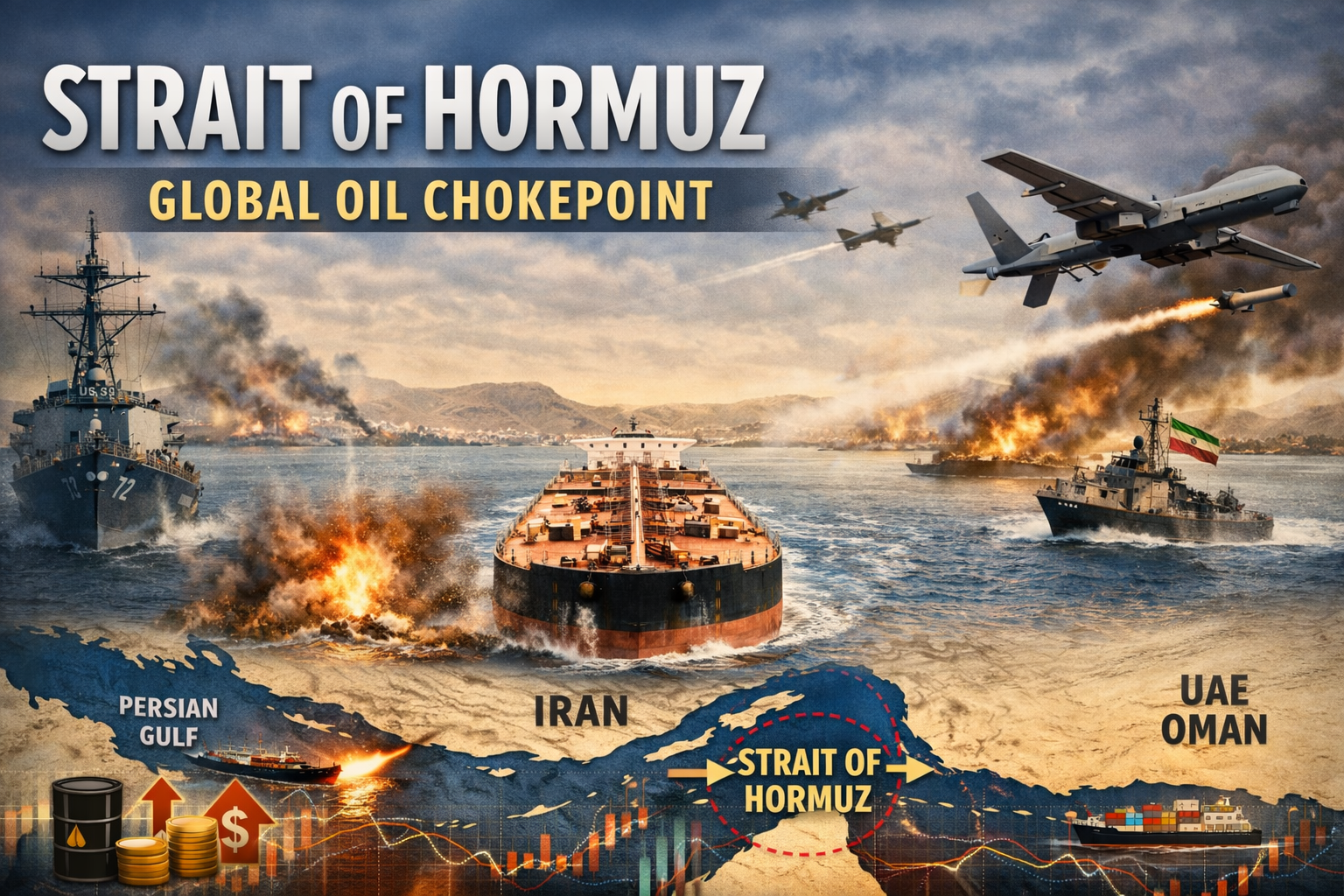
When global tensions rise, markets do not look at maps for long. They zoom in. And right now, the spotlight is fixed firmly on the Strait of Hormuz. This narrow passage between the Persian Gulf and the Arabian Sea has become the centre of global economic anxiety as tensions escalate between Iran and Israel, with the United States closely involved. The Strait of Hormuz is not just a regional shipping lane. It is the bloodstream of the global energy system. And when that bloodstream tightens, the entire economic body reacts.
Why The Strait Of Hormuz Matters So Much
Nearly one-fifth of the world’s oil supply flows daily through the Strait of Hormuz. Major Gulf producers rely on it to transport crude to Asia, Europe, and beyond. Liquefied natural gas shipments also depend heavily on this route.
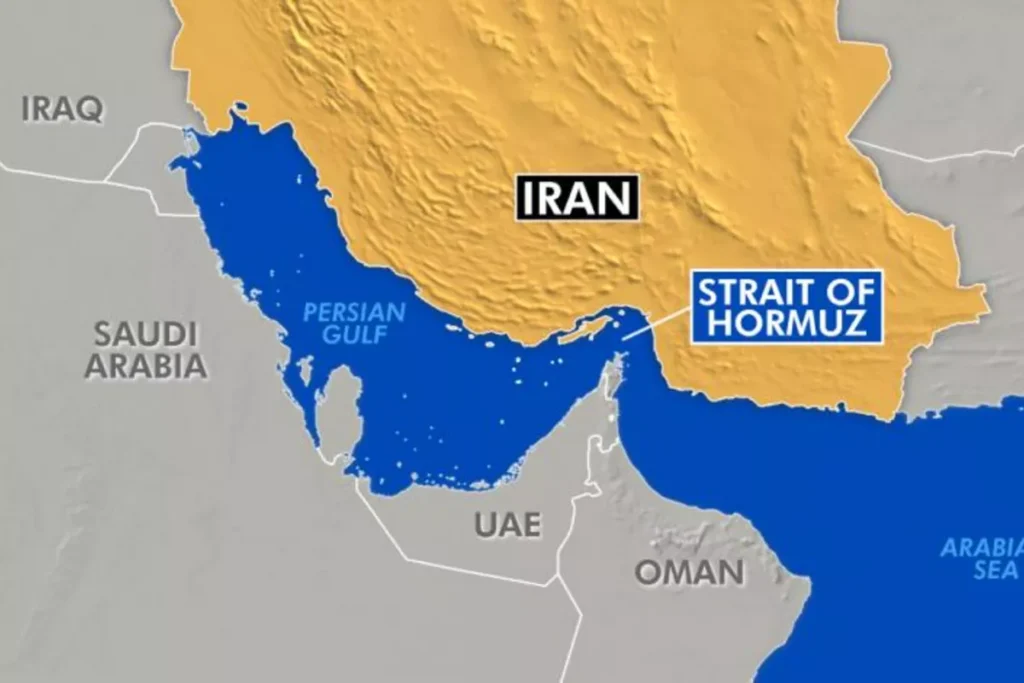
At its narrowest, the Strait of Hormuz is only about 33 kilometres wide. Shipping lanes within it are even narrower. That makes it one of the world’s most vulnerable energy chokepoints.
If traffic slows or faces disruption, oil markets respond immediately. Not because the oil disappears overnight, but because uncertainty drives prices. Traders factor in risk. Insurance companies increase premiums. Freight costs climb. And that ripple spreads quickly across continents.
Strait Of Hormuz And Global Inflation
Energy is not a single industry. It is a foundation beneath almost every industry.
If instability in the Strait of Hormuz pushes oil prices higher, the effects multiply:
- Transport becomes more expensive.
- Air travel costs rise.
- Manufacturing inputs increase in price.
- Food supply chains tighten due to fuel costs.
- Electricity generation costs climb in oil-dependent regions.
This feeds directly into inflation. And inflation influences central bank decisions, borrowing costs, and household budgets.
For countries that rely heavily on oil imports, including India, sustained volatility in the Strait of Hormuz can widen trade deficits and pressure currencies. What begins as a naval standoff can end as a grocery bill shock.
Insurance, Shipping Risk, And The Strait Of Hormuz
Even without a full blockade, tension around the Strait of Hormuz can increase global costs.
Shipping insurers calculate risk based on conflict probability. When military activity increases, so do insurance premiums for tankers. Those costs are passed down the supply chain.
The Strait lies between Iran to the north and Oman and the United Arab Emirates to the south. During periods of escalation, naval patrols intensify. Surveillance expands. Military exercises increase.
Markets do not wait for a missile to hit a tanker. The possibility alone can move prices.
Can The Strait Of Hormuz Be Closed?
A complete closure of the Strait of Hormuz would be extreme and would likely trigger an immediate multinational military response. Gulf economies themselves depend heavily on exports flowing through it, which creates strong incentives to prevent a shutdown.
However, partial disruptions are more realistic scenarios:
- Targeted tanker incidents.
- Port slowdowns.
- Naval standoffs.
- Drone harassment.
- Temporary maritime warnings.
Even limited disruption can reduce throughput and tighten global supply margins. When global inventories are already under pressure, small disruptions can have an outsized impact.
Supply Chains And The Domino Effect
Modern supply chains are designed for efficiency, not prolonged shock.
If the Strait of Hormuz faces sustained instability:
- Petrochemical production could slow, affecting plastics and pharmaceuticals.
- Fertiliser manufacturing may tighten, impacting agriculture.
- Aviation fuel supplies could strain international travel.
- Container shipping rates may rise globally.
Energy costs influence almost every product category. A prolonged spike would not remain confined to oil markets. It would echo through manufacturing hubs, retail sectors, and emerging economies.
Geopolitical Leverage And Strategic Calculations
Iran has historically viewed the Strait of Hormuz as strategic leverage during periods of confrontation. While it has rarely fully blocked traffic, the threat itself carries weight.
The United States maintains a strong naval presence in the region to ensure freedom of navigation. Any direct confrontation in these waters risks transforming a regional conflict into a global economic event.
Israel’s involvement in escalating tensions affects how Iran calibrates its broader regional responses. If Tehran feels strategically cornered, maritime pressure becomes part of the wider equation.
That is why energy analysts track naval deployments as closely as diplomatic statements.

Markets React To Signals, Not Just Events
The Strait of Hormuz influences markets not only through physical supply but also through perception.
A warning from a naval authority. A confirmed strike near a port. A drone incident was reported by shipping operators. Each signal can shift crude benchmarks within hours.
Volatility itself becomes costly. Investors reposition. Emerging markets experience capital outflows. Businesses delay expansion plans.
Stability in the Strait of Hormuz is as much about confidence as it is about cargo.
Why The Strait Of Hormuz Remains The World’s Most Watched Waterway
In a digital age powered by technology and global finance, a narrow maritime corridor carved by geography continues to shape economic stability.
The Strait of Hormuz sits at the intersection of energy, geopolitics, and inflation. If tensions ease, markets may stabilise quickly. If escalation continues, volatility will likely remain elevated.
Also Read: Countries Hit In Iran Israel Conflict: The Middle East Crossfire In 2026
The world is watching because this waterway does not merely connect two seas. It connects conflict to consumer prices, naval manoeuvres to supermarket shelves, and regional rivalry to global economic stability.
Frequently Asked Questions (FAQs)
Q1. Why is the Strait of Hormuz important?
It carries nearly 20% of the world’s oil supply, making it one of the most critical energy routes globally.
Q2. Can the Strait of Hormuz actually be closed?
A full closure is unlikely due to global military and economic consequences, but partial disruptions are possible.
Q3. How does tension in the Strait of Hormuz affect oil prices?
Even the threat of disruption increases market uncertainty, pushing oil prices higher.
Q4. Which countries are most affected by instability in the Strait of Hormuz?
Major oil importers such as India, China, Japan, and European nations feel an immediate economic impact.
Q5. Does disruption in the Strait of Hormuz impact everyday consumers?
Yes. Higher oil prices can increase fuel costs, transport expenses, food prices, and overall inflation.