
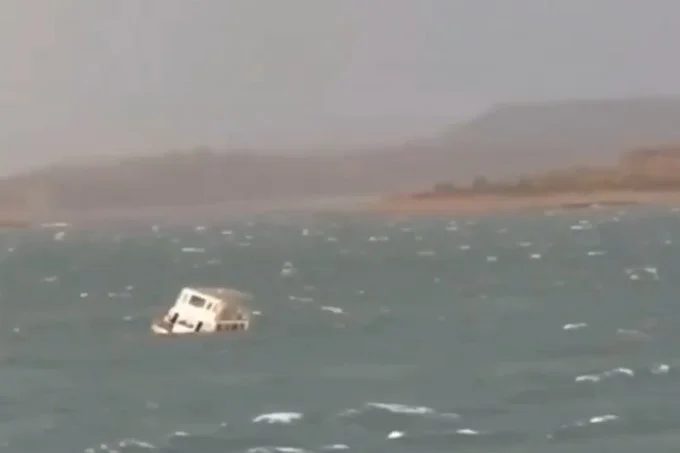
There are days that begin like postcards. Sunlight stretched gently across water, families stepping into boats with the easy optimism of a short escape, conversations floating as lightly as the breeze. And then there are days that fracture without warning, leaving behind not just loss, but questions that refuse to settle. The Bargi Dam boat tragedy is one such day.
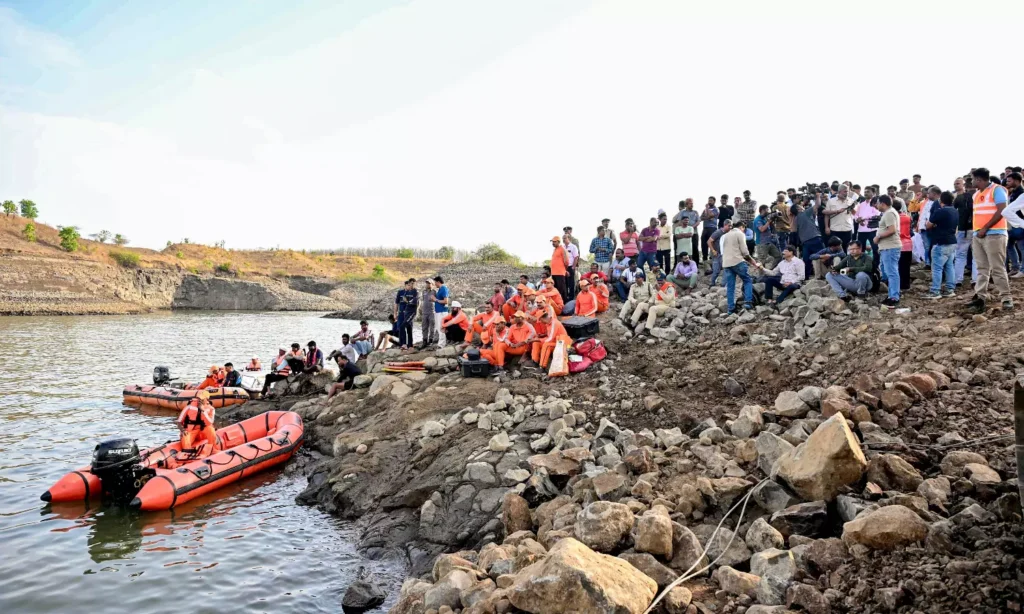
What unfolded at Bargi Dam was not meant to become a headline. It was meant to be ordinary. But somewhere between calm waters and rising winds, that ordinary moment slipped beyond control, turning a routine outing into a devastating reminder of how fragile safety can be when it is assumed rather than ensured.
A Day That Did Not Know It Would End Differently
The most unsettling thing about the Bargi Dam boat tragedy is not just what happened, but how it began. There were no warning sirens echoing across the reservoir, no visible signs of danger that would have stopped people from boarding the boat. It looked like any other day meant for leisure.
Reservoirs have a way of performing calm. They stretch wide and open, offering a sense of stillness that feels almost curated. Bargi, like many such water bodies, has been positioned as a space where people can momentarily step away from the intensity of daily life. A boat ride here is not sold as an adventure. It is sold as something gentler, safer.
That is precisely why the shift feels so jarring.
Because when the wind rose, it did not rewrite the scene gradually. It interrupted it. What had seemed stable began to move with a force that the boat, and those on it, were not prepared to negotiate. The capsizing, when it came, was not just a mechanical failure. It was the collapse of an assumption that this was a controlled environment.
When Water Changes Its Mind
To understand the Bargi Dam boat tragedy, one has to understand the nature of the space itself. Large reservoirs are not passive bodies of water. They are responsive, constantly adjusting to shifts in weather, temperature, and pressure.
In central India, these shifts can be abrupt. Warm air currents, incoming moisture, and pressure variations can collide in ways that produce sudden gusts of high-speed wind. Over open water, where there are no obstacles to slow them down, these winds gather strength quickly.
What appears as a minor change on land can become a destabilising force on the surface of a reservoir.
This is not an unknown phenomenon. It is precisely why boating operations in such areas are expected to be governed by strict safety protocols. Weather monitoring, operational thresholds, and emergency preparedness are not optional add-ons. They are essential safeguards.
And yet, time and again, these safeguards are treated as flexible.
A Moment That Stays
In the days following the incident, reports have documented the scale of loss, the progress of rescue operations, and the initiation of official inquiries. This is necessary. It provides clarity, structure, and a record of events. But sometimes, a single detail cuts through that structure.
The account of a mother and her child, found together during recovery efforts, is one such detail. It does not need elaboration to be understood. It speaks in a language that is instinctive of protection, of closeness, of a bond that persists even when circumstances become overwhelming.
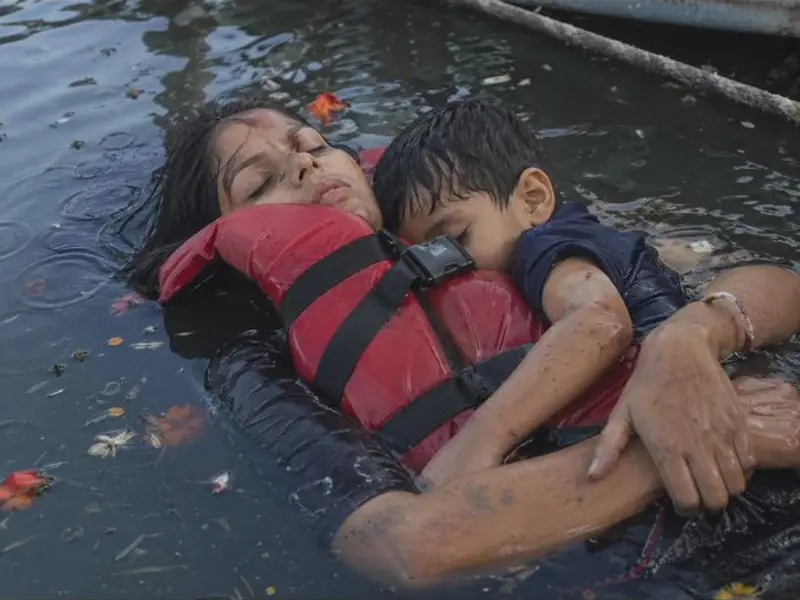
It is an image that lingers, not because it is extraordinary, but because it is deeply human. And yet, to stop at that image would be to do the story a disservice. Because the Bargi Dam boat tragedy is not only about the moments on the water. It is about everything that led up to them.
The Architecture Of Neglect
Tragedies of this nature rarely emerge from a single failure. They are constructed, quietly and cumulatively, through a series of decisions, omissions, and assumptions.
India’s inland water tourism sector has expanded steadily over the years. Dams, lakes, and rivers are increasingly being integrated into tourism circuits, offering new avenues for recreation and revenue. This growth, however, has not always been matched by a corresponding strengthening of safety systems.
Across multiple locations, similar patterns have been observed. Boats operate within capacity limits that are not always strictly enforced. Safety equipment is present, but its use is inconsistent. Weather assessments are often general rather than real-time. Oversight exists, but its implementation varies.
Individually, these may seem like manageable gaps. Together, they create a fragile system. The Bargi Dam boat tragedy exposes this fragility with uncomfortable clarity. It shows how quickly a routine activity can become dangerous when the structures meant to support it are not uniformly reliable.
Weather Is A Trigger, Not An Explanation
In the immediate aftermath of such incidents, weather often becomes the central explanation. In this case, reports of sudden high-speed winds have been widely cited. There is truth in this. But there is also a risk in allowing that truth to stand alone.
Weather, by its very nature, is variable. It cannot be controlled. But it can be monitored, anticipated, and responded to. Modern systems provide tools to track changes and issue alerts. The effectiveness of these tools depends on how they are integrated into decision-making processes.
The critical question, then, is not whether the wind rose, but whether the system was prepared for the possibility that it might.
Were there mechanisms in place to detect rapid changes?
Were operators trained to respond to such signals?
Did protocols prioritise safety over continuity of service?
These questions shift the focus from inevitability to accountability.
Beyond Immediate Blame
Public discourse often seeks clarity in the form of responsibility. Who is at fault? Who should be held accountable? These are important questions. But they must be asked with an understanding that responsibility operates at multiple levels.
The boat operator and crew represent the most visible layer. Their actions, decisions, and adherence to safety norms are critical. But they function within a larger framework shaped by regulatory bodies, enforcement mechanisms, and institutional practices.
The Bargi Dam boat tragedy invites scrutiny of that framework. It raises questions about how safety standards are defined, how consistently they are enforced, and how effectively they are monitored. It asks whether systems are designed to prevent failure, or merely to respond to it.
Accountability, in this context, cannot be limited to individuals. It must extend to the structures within which they operate.
The Cycle Of Response
If there is one aspect of such tragedies that is particularly disquieting, it is their familiarity. Not in their details, but in their trajectory. An incident occurs. Rescue operations are launched. Investigations are announced. Regulations are revisited. For a period, vigilance increases.
And then, gradually, attention shifts. Operations resume. Systems return to their previous state. The urgency that followed the tragedy begins to fade.
This cycle has repeated itself across different contexts and locations. The risk is not just recurrence, but normalisation, the quiet acceptance that such incidents are part of the landscape. The Bargi Dam boat tragedy stands at a point where this cycle can either continue or be interrupted.
Seeing Without Consuming
In an age defined by immediacy, tragedies are not only reported. They are shared, circulated, and, at times, consumed.
The image of the mother and child has travelled widely. It evokes empathy, but it also raises questions about the ethics of visibility. What does it mean to witness such a moment through a screen? Does sharing it contribute to awareness, or does it risk reducing a complex event to a single, powerful frame?
There is no easy resolution to this tension. But there is a responsibility to engage with such material thoughtfully to allow it to prompt reflection rather than replace it. To see, and then to ask what must change.
What Change Should Look Like
If the Bargi Dam boat tragedy is to have meaning beyond its immediate loss, it must lead to a re-evaluation of how safety is understood and implemented in inland water tourism. This does not require new inventions. It requires consistent application of existing principles.
Safety equipment must not only be available, but also used. Weather monitoring must move from general awareness to real-time integration. Operational decisions must be guided by clear thresholds rather than discretionary judgment under pressure.
Equally important is the need for regular oversight. Inspections must be thorough and independent. Training must be continuous. Emergency preparedness must be treated as essential, not optional. These measures are not extraordinary. They are foundational.
A Memory That Should Not Settle
In the end, what remains after a tragedy is not just loss, but memory. The way that memory is held determines what follows. At Bargi, the water has returned to its calm surface. The visual disturbance has passed. But beneath that surface lies an event that cannot be allowed to dissolve into routine.
The Bargi Dam boat tragedy is not just a moment to be recorded. It is a moment to be understood. It asks whether safety will continue to be reactive, or whether it will become embedded in the way such spaces are managed. It asks whether accountability will extend beyond immediate response into sustained reform.
Most of all, it asks whether we are willing to move beyond the comfort of explanation towards the harder work of change. Because water does not remember in the way we do. It is we who must choose not to forget.
Frequently Asked Questions (FAQs)
Q1. What is the Bargi Dam boat tragedy?
It refers to a boat capsizing incident at Bargi Dam in Madhya Pradesh, where sudden winds led to multiple casualties.
Q2. Where did the incident occur?
At Bargi Dam near Jabalpur, a popular inland tourism destination.
Q3. What caused the accident?
Preliminary reports suggest strong winds and sudden weather changes, though investigations are ongoing.
Q4. Are safety lapses being examined?
Yes, authorities are investigating operational protocols, safety compliance, and preparedness.
Q5. Why is this incident significant?
It highlights ongoing concerns around boating safety and regulatory enforcement in India.