
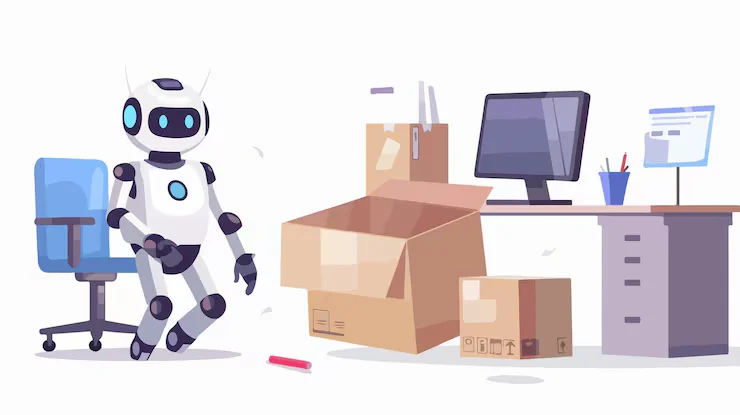
AI layoffs, let’s say the quiet part out loud.
The AI revolution was never just about innovation. It was about replacement.
For years, companies repeated the same promise: AI will make humans more efficient.
What many people heard was simpler:
Humans are expensive. Machines are cheaper.
That belief fuelled mass layoffs, automation drives, and a global obsession with AI vs human jobs as a zero-sum game.
But here’s the uncomfortable twist.
Some of those same companies are now quietly bringing humans back.
Not because they changed their philosophy.
Because they hit a wall.

Hot Take: AI Didn’t Steal Jobs, It Exposed Bad Business Decisions
Unpopular opinion: AI isn’t the villain here.
Bad implementation is.
Companies rushed into automation like it was a cost-cutting cheat code. Replace staff, plug in AI, reduce payroll, increase margins.
It worked… on spreadsheets.
But in real life? Customers noticed.
Service quality dropped. Output became inconsistent. And suddenly, “efficiency gains” started looking a lot like operational damage control.
That’s the first layer of the AI layoffs irony nobody likes to discuss publicly.
The Klarna Example Nobody Wants to Overanalyse
Klarna became the poster child of aggressive AI adoption.
It replaced a large portion of its customer service workforce with AI tools to streamline operations.
On paper, it looked like the future.
In reality, it triggered complaints, weaker support experiences, and growing dissatisfaction.
Eventually, the company started rehiring human workers again.
Now here’s the controversial part:
Was that a “mistake”… or just what happens when companies confuse automation with intelligence?
Because replacing people with systems that still need people to fix them is not innovation.
It’s outsourcing the problem, not solving it.
Hot Take: AI Is Not Replacing Humans, It’s Creating More Invisible Human Work
Here’s something companies won’t put in press releases:
AI didn’t remove work.
It redistributed it into the shadows.
Someone still has to:
- Correct AI outputs
- Review AI-generated decisions
- Handle edge cases AI can’t process
- Calm down frustrated customers who “talked to the bot for 40 minutes”
So while headlines scream AI replacing jobs, what’s actually happening is quieter and more ironic:
Humans are still doing the work. Just less visibly, and with fewer job titles attached.
The Real Controversy: AI Is Not Cheaper at Scale
This is where the narrative gets uncomfortable for executives.
AI is often sold as a cost-saving tool.
But at scale:
- API costs increase
- Infrastructure demands grow
- Error correction requires human labour
- Quality control becomes mandatory
In some cases, companies discover something almost embarrassing:
They replaced salaried employees with systems that generate recurring bills.
That’s not efficiency.
That’s subscription-based payroll with extra steps.

This a wonder of AI that can be interesting for you and your kids.
Buy this:
on Amazon
AI vs Human Jobs: The Debate Everyone Is Getting Wrong
The public debate usually looks like this:
- Side A: “AI will take all jobs”
- Side B: “No, AI will help humans”
Both are oversimplified.
The real shift is messier.
AI is excellent at:
- Speed
- Volume
- Pattern recognition
Humans are still essential for:
- Judgment under ambiguity
- Emotional intelligence
- Accountability (yes, someone has to be responsible when things go wrong)
So the real AI vs human jobs reality isn’t competition.
It’s dependency.
AI depends on humans more than companies want to admit.
Hot Take: Companies Didn’t Replace Humans, They Just Renamed Them
Here’s another uncomfortable truth.
In many organisations, humans weren’t eliminated.
They were:
- Reclassified
- Consolidated
- Shifted into “review roles”
- Hidden behind automation layers
It looks like efficiency.
But functionally, it’s the same workforce doing different work, now under the supervision of software that still needs supervision.
The AI Layoffs Irony Nobody Can Spin Nicely
Let’s summarise the irony:
- Companies replaced humans with AI
- AI produced imperfect or costly outcomes
- Humans were rehired to fix, monitor, and manage AI
So the final structure looks like this:
AI generates work → Humans repair work → Business pays for both
If that sounds inefficient, that’s because it is.
But admitting that publicly would mean admitting something more uncomfortable:
The rush to automate may have been more emotional than strategic.
Hot Take: We Overestimated AI and Underestimated Work Reality
Work isn’t a clean system.
It’s messy, unpredictable, and context-heavy.
AI thrives in structured environments. Reality rarely behaves like one.
So when companies tried to force reality into automation frameworks, they didn’t eliminate complexity.
They just relocated it.
Usually back to humans.
Also Read: Why Oracle Is Laying Off 30,000 Employees Globally In 2026
The Future Isn’t AI vs Humans… It’s Who Gets Blamed When It Fails
The loud narrative says AI is replacing human work.
The quieter reality says something else:
AI is absorbing attention, not responsibility.
Because when things break, when customers complain, when logic fails in messy real-world situations…
It’s still humans who get called.
And that might be the most honest AI layoffs irony of all.
Frequently Asked Questions (FAQs)
Q1. What is the AI layoffs irony?
It refers to companies replacing human workers with AI, then rehiring humans after AI fails to meet expectations or increases hidden costs.
Q2. Is AI really replacing jobs?
AI is automating tasks, but most roles are being transformed rather than fully eliminated.
Q3. Why are companies rehiring humans after AI adoption?
Due to quality issues, customer dissatisfaction, and rising operational complexity.
Q4. Is AI cheaper than human employees?
Not always. At scale, AI systems can become expensive due to usage, infrastructure, and maintenance costs.
Q5. What is the future of AI vs human jobs?
A hybrid system where AI handles repetitive work and humans manage oversight, creativity, and decision-making.