
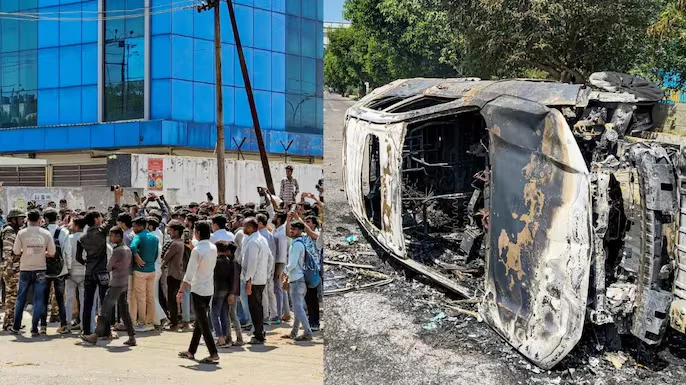
The violence seen across parts of Noida this week did not emerge in isolation. While the immediate images burning vehicles, blocked roads, and police action suggest a sudden Noida protest that looks like a breakdown of order, the underlying causes point to a slower, more structural build-up. At the centre of it is a familiar issue: wages that have not kept pace with the cost of living.
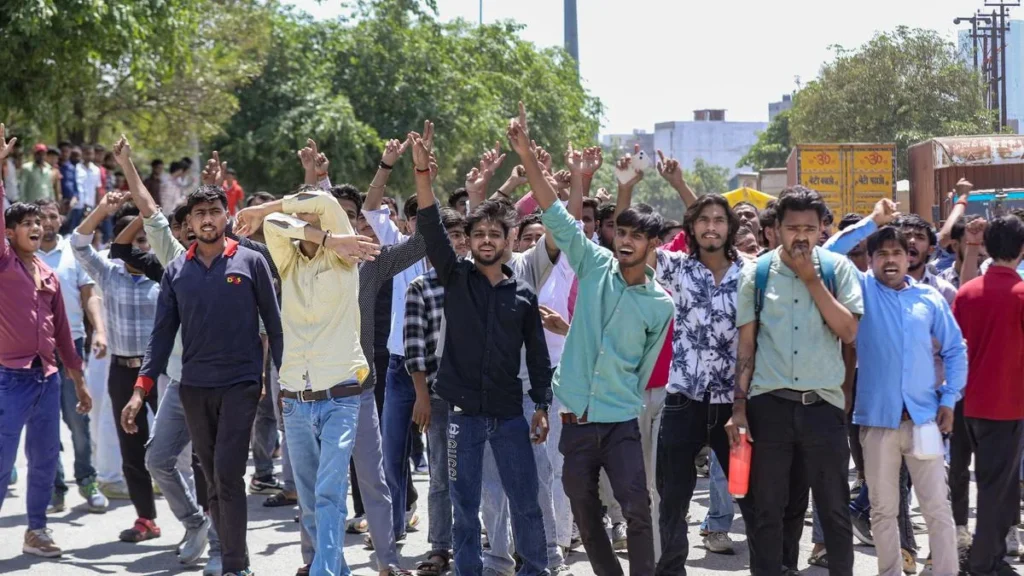
Noida, part of one of India’s most important industrial corridors, employs thousands of workers across manufacturing units. For many of them, incomes have remained largely static even as everyday expenses have risen steadily.
The Immediate Trigger To Noida Protest
The Noida protests were catalysed by demands that are neither new nor unusual:
- Revision of minimum wages
- Payment for overtime
- Defined working hours
- Improved workplace conditions
What appears to have intensified the situation, however, is a regional disparity.
In neighbouring Haryana, recent revisions to minimum wages created a visible gap with those in Uttar Pradesh. For workers operating within the same economic ecosystem, such differences are difficult to rationalise.
This comparison appears to have transformed a long-standing grievance into a more immediate flashpoint.
From Demonstration To Disruption: Noida Protests
Initial gatherings of workers escalated over a short period. Key industrial zones reported large crowds, which eventually spilled onto arterial roads.
The consequences of the Noida protests were immediate:
- Traffic disruptions across major routes
- Temporary shutdown of industrial operations
- Damage to vehicles and property
- Deployment of police forces, including use of tear gas in some areas
For a city that functions as a logistics and manufacturing hub, even short disruptions have wider economic implications.
Understanding The Structural Factors
To view the protests solely through the lens of law and order would be reductive. Several underlying factors are at play:
1. Wage Stagnation
For many workers, wage growth has not kept pace with inflation. This has effectively reduced real income, even when nominal wages remain unchanged.
2. Rising Cost Of Living
Urban and peri-urban centres like Noida have seen consistent increases in housing, transport, and food costs. These shifts disproportionately affect lower-income workers.
3. Inter-State Wage Variation
Labour falls under a complex regulatory framework where states set their own minimum wages. This often leads to disparities across neighbouring regions, as seen between Haryana and Uttar Pradesh.
4. Enforcement Gaps
Even where labour protections exist on paper, enforcement can be inconsistent. Issues such as unpaid overtime and extended working hours are frequently cited by workers across industrial clusters.
The Economic Stakes
Noida’s industrial ecosystem is closely tied to supply chains that extend beyond the National Capital Region. Disruptions here can affect production schedules, delivery timelines, and, in some cases, export commitments.
For businesses, the challenge lies in balancing cost structures with compliance and workforce stability. For workers, the concern is more immediate: income security.
This tension is not unique to Noida, but the scale of the protests has brought it into sharper focus.
State Response And The Road Ahead
Authorities have responded with a combination of enforcement and negotiation:
- Increased police presence in affected areas
- Engagement with worker representatives
- Indications of potential reviews of wage-related concerns
The effectiveness of these measures will depend on the credibility of follow-through. Short-term containment may restore order, but without substantive changes, underlying issues are likely to persist.
Also Read: New Wage Rule Explained: Will Your In-Hand Salary Reduce Under India’s Labour Codes?
Why This Matters Beyond One City
The developments in Noida protests reflect broader pressures within India’s urban labour markets. As cities expand and costs rise, the gap between wages and living expenses becomes more pronounced.
At the same time, inter-state variations in labour policy can create uneven outcomes for workers performing similar roles. This raises questions about standardisation, competitiveness, and equity.
In that sense, Noida is not an exception. It is an example.
The protests in Noida are not simply an episode of unrest. They are indicative of a deeper economic imbalance one that sits at the intersection of wages, inflation, and policy variation.
Also Read: Triskaidekaphobia: Why The Number 13 Still Makes People Uneasy
While the immediate focus remains on restoring normalcy, the longer-term challenge lies in addressing the structural issues that brought workers onto the streets in the first place.
Whether this moment leads to meaningful reform or becomes another instance of temporary disruption will depend on what follows next not just in Noida, but across similar industrial centres in India.
Frequently Asked Questions (FAQs)
Q1. What triggered the Noida protests?
The protests were mainly driven by demands for higher wages, better overtime pay, and improved working conditions.
Q2. Why did the situation turn violent?
Tensions escalated during demonstrations, leading to clashes, road blockages, and damage to property in some areas.
Q3. Are the protests only about Noida?
No. While centred in Noida, the issue reflects broader wage and labour concerns across industrial regions in Uttar Pradesh and nearby states.
Q4. How has the government responded?
Authorities have increased security and initiated discussions with stakeholders to address wage and labour-related grievances.
Q5. Will this affect industries in the region?
Yes, short-term disruptions to production and logistics have already been reported, though normal operations are expected to resume gradually.