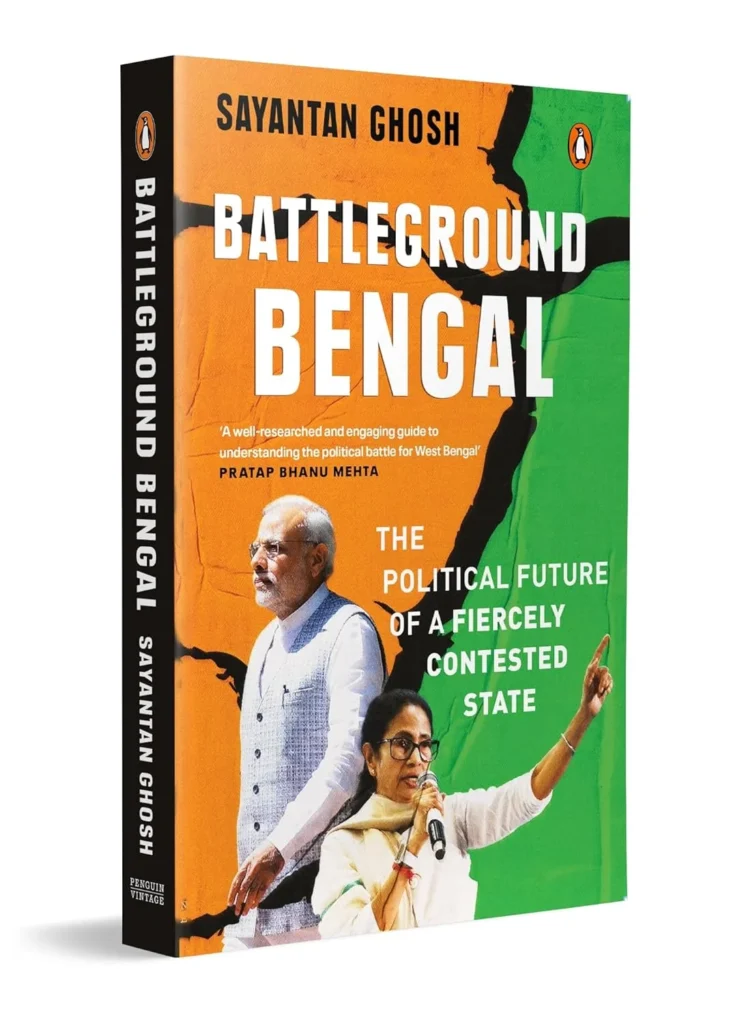
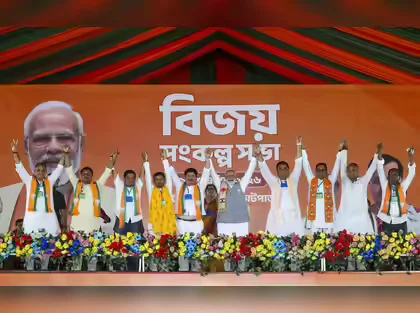
When Narendra Modi invoked the phrase “Anga, Banga, Kalinga,” it did not sound like a typical political slogan. It sounded older. Almost like something pulled out of a forgotten manuscript, dusted off, and placed carefully into the present. At first glance, it may seem like a rhetorical flourish, a poetic nod to history. But look closer, and it begins to resemble something more deliberate: a framework, a map, perhaps even a blueprint. Because “Anga, Banga, Kalinga” is not just a phrase.
It is a reimagining of eastern India not as a collection of states, but as a connected civilisational corridor with shared memory, economic potential, and strategic importance. To understand what this vision holds, you have to travel backwards before moving forward.
The Geography Of Memory
Long before modern state boundaries, the Indian subcontinent was organised through regions that were cultural as much as they were geographical.
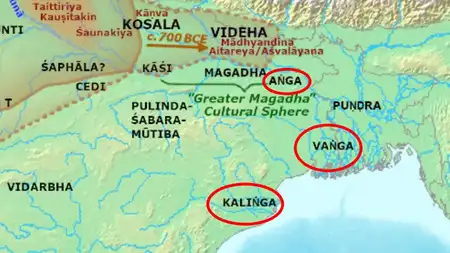
- Anga roughly corresponds to parts of present-day Bihar and Jharkhand
- Banga refers to Bengal, today’s West Bengal and Bangladesh
- Kalinga stretches across what is now Odisha and parts of northern Andhra Pradesh
These were not just territories. They were vibrant centres of trade, scholarship, art, and maritime power. Ports along Kalinga connected India to Southeast Asia. Bengal thrived as a cultural and intellectual hub. Anga played a crucial role in ancient political networks. Together, they formed a kind of eastern spine, dynamic, interconnected, and outward-looking.
History, however, has a way of scattering continuity. Over centuries, invasions, colonial restructuring, and post-independence economic shifts altered the trajectory of these regions. What was once a thriving corridor became, in parts, economically lagging and politically fragmented. The phrase “Anga, Banga, Kalinga” is, in many ways, an attempt to remember that continuity and to rebuild it.
From Cultural Phrase To Political Strategy
Political language is rarely accidental. When a leader reaches into history, it is often to shape the future.
In invoking “Anga, Banga, Kalinga,” Modi is doing something layered:
- Reclaiming a shared past
- Reframing regional identity
- Positioning eastern India as central, not peripheral to India’s growth story
For decades, India’s development narrative has leaned heavily toward the west and south. The east, despite its resources and population, has often been described in terms of what it lacks.
This vision flips that narrative. It asks a different question: What if eastern India is not the problem to be solved, but the engine yet to be fully realised?
The Economic Undercurrent
Strip away the poetry, and what remains is a strong economic argument.
Eastern India is rich in:
- Natural resources (coal, minerals, fertile land)
- Human capital (dense population, growing workforce)
- Strategic location (proximity to Southeast Asia and eastern trade routes)
Yet, its economic output has not matched its potential. Infrastructure gaps, industrial stagnation in certain pockets, and uneven investment have held it back.
The “Anga, Banga, Kalinga” framework hints at an integrated approach:
- Strengthening connectivity, roads, rail, ports
- Encouraging industrial corridors
- Leveraging coastal economies
- Reviving inland trade networks
Think of it as stitching together regions that have long existed side by side but not always in sync.
Ports, Corridors, And The Maritime Imagination
One of the most compelling aspects of this vision lies along the coast.
Kalinga’s historical strength was maritime. Its ships sailed far beyond the Indian Ocean, carrying goods, ideas, and culture. That legacy is not just symbolic, it is strategically relevant today.
Modern initiatives focusing on port development, coastal infrastructure, and logistics networks suggest an attempt to revive this maritime imagination. If executed effectively, eastern India could become a key gateway, not just for India, but for regional trade across the Bay of Bengal. It is a reminder that geography, when paired with policy, can transform destiny.
The Politics Of Identity Reimagined
There is also a subtle political layer to this phrase. Regional identities in India are strong, often fiercely protected. But they can also become isolating when framed narrowly. “Anga, Banga, Kalinga” offers a broader canvas. It does not erase local identities; it connects them. It suggests that being rooted in one’s region and being part of a larger narrative are not contradictions.
This matters politically. Because development narratives gain strength when they resonate emotionally, not just economically. By invoking a shared civilisational past, the phrase attempts to create that emotional resonance one that transcends current political boundaries.
The Challenge Of Translation
Every grand vision faces a familiar test: translation from idea to implementation. The success of this blueprint will depend on:
- Coordination between multiple states with different political leaderships
- Consistent investment over time
- Addressing local socio-economic disparities
- Ensuring that development is inclusive, not extractive
History provides inspiration, but it does not guarantee execution. There is also the risk of over-romanticising the past. While historical frameworks can guide, they cannot substitute for present-day realities. Policies must adapt to contemporary needs, not just echo ancient ones.
A Region At A Crossroads
Eastern India today stands at an interesting intersection. On one side lies a history of underperformance relative to potential. On the other lies a growing recognition of its strategic importance.
Urban centres are expanding. Infrastructure projects are gaining momentum. Conversations around development are becoming sharper, more urgent. The “Anga, Banga, Kalinga” idea arrives at this moment, when the region is already in motion, but perhaps in need of a unifying direction.
Beyond Politics: A Civilisational Echo
What makes this phrase linger is not just its policy implications, but its poetic weight. It reminds us that regions are not just administrative units. They are stories, layered, evolving, interconnected. By reaching into that story, this vision attempts to bridge time itself. To say that the past is not gone; it is waiting to be reinterpreted.
Whether one agrees with the politics behind it or not, the idea carries a certain imaginative force. It invites us to see eastern India not as fragmented, but as part of a larger, continuous narrative.
“What is Anga, Banga, Kalinga?” is, in one sense, a historical question. But in today’s context, it is also a forward-looking one. It represents an attempt to redraw the mental map of India’s development, placing the east not at the margins, but at the centre.
Whether this blueprint becomes reality will depend on execution, collaboration, and sustained political will. But as an idea, it has already done something important: it has shifted the conversation.
From scarcity to possibility.
From fragmentation to connection.
From memory to momentum.
Frequently Asked Questions (FAQs)
Q1. What does “Anga, Banga, Kalinga” refer to?
It refers to three ancient regions of eastern India, Anga (Bihar/Jharkhand), Banga (Bengal), and Kalinga (Odisha/Andhra region).
Q2. Why did Narendra Modi use this phrase?
To highlight a vision of integrated development and cultural unity for eastern India, rooted in its historical identity.
Q3. What is the economic significance of this concept?
It emphasises leveraging eastern India’s resources, workforce, and strategic location to drive growth and connectivity.
Q4. Is this purely symbolic or policy-driven?
While symbolic in origin, it aligns with ongoing infrastructure, connectivity, and regional development initiatives.
Q5. What challenges could this vision face?
Implementation hurdles include political coordination, investment consistency, and ensuring inclusive development.