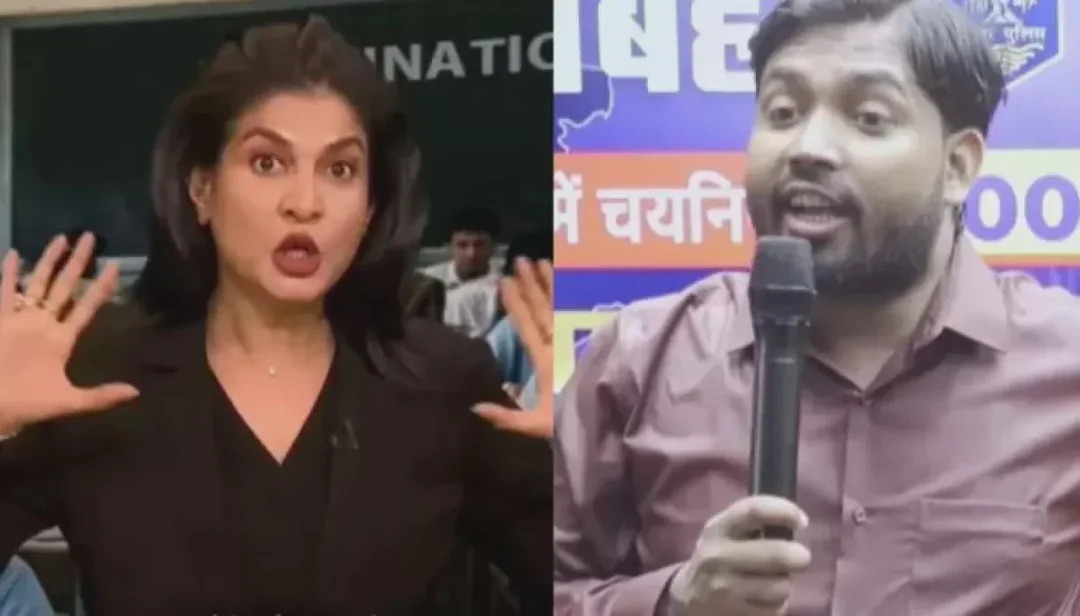
The internet does not just reflect public opinion anymore. It shapes it, bends it, and sometimes redirects it entirely. In an age where attention is more valuable than truth, even a single statement can trigger a chain reaction that moves far beyond its original context. The recent debate involving television journalist Anjana Om Kashyap and her remarks on YouTube teachers became one such moment. What began as a disagreement over online teaching quickly evolved into a much larger ecosystem of reactions, counter-reactions, and shifting narratives. But beneath the noise lies a deeper question: did this controversy end up diverting attention from more serious education-related issues?

From A Statement To A Storm
The controversy began after comments attributed to Anjana Om Kashyap regarding YouTube educators circulated widely online. Many students and online teachers interpreted the remarks as dismissive of the role digital educators now play in India’s learning ecosystem. The reaction was immediate and emotional.
YouTube teachers, students, and content creators responded strongly. For many learners, online teachers are not influencers. They are lifelines. They are the reason affordable education reaches beyond metro cities into smaller towns and villages. What followed was a rare moment of unity in a highly competitive space. Educators across different platforms and subjects came together in defence of the credibility of online teaching.
Why YouTube Teachers Matter So Much
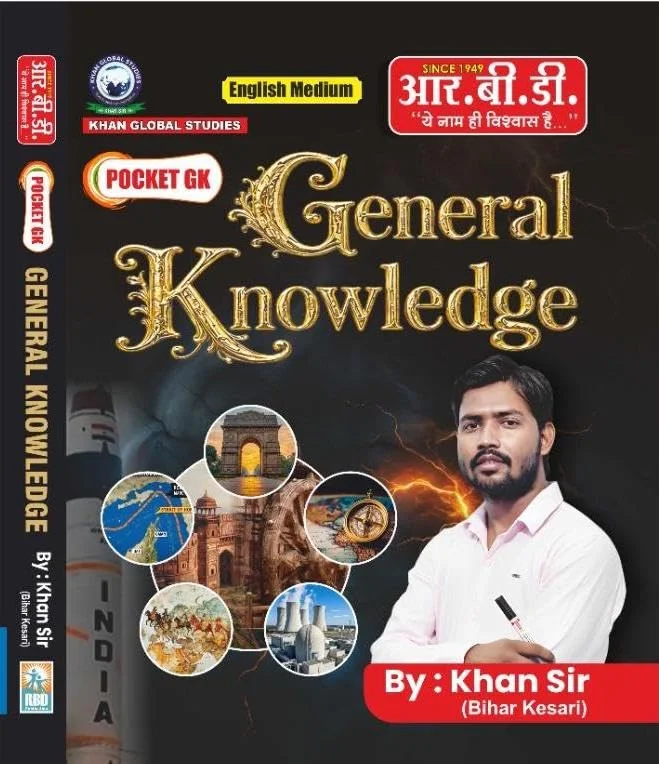
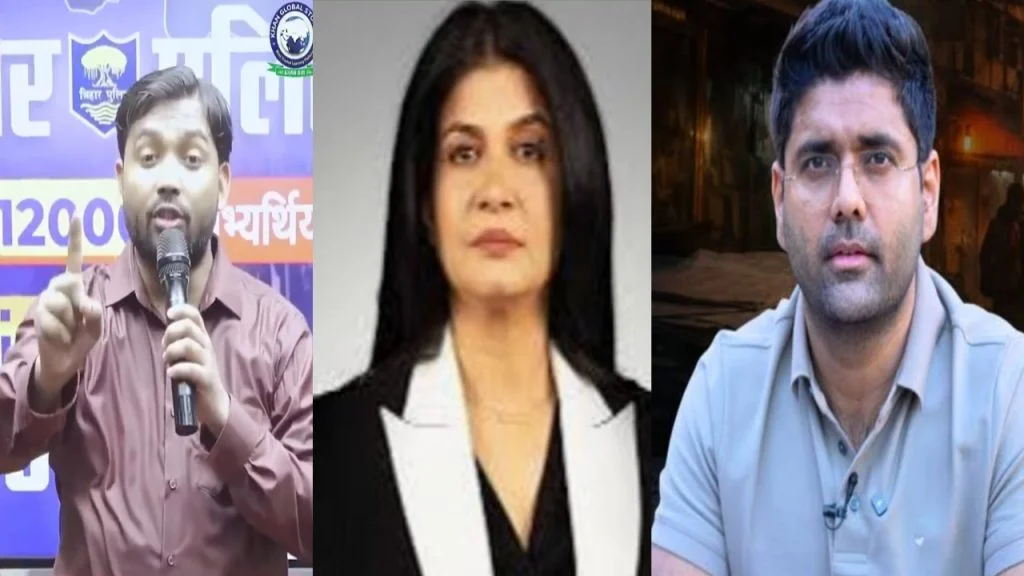
To understand the intensity of the response, one must understand what YouTube education represents in India today. Teachers like Khan Sir have become widely popular for offering affordable education to competitive exam aspirants. His appeal lies not just in content delivery but in accessibility. Many students describe his teaching as simple, relatable, and financially reachable for families that cannot afford expensive coaching institutes.
Similarly, educators such as Abhinav Maths have built strong followings by breaking down complex mathematical problems into structured, easy-to-follow methods. For many students, this style of teaching is not just helpful. It is transformative. In a system where coaching costs can often become a barrier, these educators represent a parallel education ecosystem that is significantly more accessible. This is why criticism of online teachers often triggers strong emotional responses. It is not just about personalities. It is about opportunity.
The Narrative Begins To Shift
As the controversy spread, something subtle began to change. The focus slowly moved away from the original remarks and toward individual educators, their methods, their influence, and even their past content. Instead of one central debate, multiple smaller debates emerged. Some discussions questioned the credibility of YouTube educators in general. Others turned into comparisons between online teachers. Soon, the original controversy began fading into the background. This shift raised an important question. Was the attention being redirected naturally, or was it simply the by-product of how social media works?
When Attention Moves, Issues Disappear
Social media does not operate on importance. It operates on engagement. What trends is not always what matters most, but what triggers reactions. A single controversy can branch into dozens of sub-controversies. Each branch generates its own wave of content, comments, and debates. In this case, the conversation about YouTube teachers gradually became a conversation about individuals, reputations, and side issues. And in the process, broader education-related concerns risked slipping out of focus. Issues such as examination pressure, affordability of coaching, and transparency in competitive exams are far more complex. They require sustained discussion rather than short bursts of attention. But complexity rarely trends.
Criticism Of Traditional Media And Public Trust
The controversy also reopened an old debate about trust in mainstream journalism. Critics of television media often point to past instances they believe reflect sensationalism or factual errors. Among the examples frequently cited in public discussions are reports involving actor Dharmendra’s alleged death hoax coverage and viral claims such as “chips in new currency notes” during demonetisation discussions. Whether these examples are interpreted as mistakes, miscommunication, or misreporting, they continue to influence how sections of the public perceive traditional news sources. This perception shaped how some audiences reacted to the controversy, turning it into a broader conversation about credibility in media.
Why Students Defended Their Teachers
The strongest reaction, however, came from students. For many learners, teachers like Khan Sir and Abhinav Maths are not just content creators. They are problem solvers. Students defending them were not necessarily reacting to a single statement. They were defending a system they feel has made education more affordable and accessible. Online educators have filled a gap that traditional institutions often leave behind. Lower fees, flexible access, and simplified explanations have made them essential for millions of students preparing for competitive exams. This is why criticism directed at them often feels personal to learners. It is tied to their struggles, aspirations, and achievements.
Was Attention Shifted Away From Bigger Issues?
This is where the debate becomes complicated. Some observers argue that the controversy created space for larger education issues to be discussed more widely. Others feel that the rapid shift in narrative actually diluted those larger concerns. There is no clear evidence that the controversy was deliberately designed to distract from any unrelated issue such as examination controversies. However, perception plays a powerful role in digital discourse. When audiences see attention shifting rapidly from one topic to another, it often creates the impression of distraction, even if the shift is organic. In reality, social media rarely needs coordination to change direction. Algorithms, influencers, and audience behaviour are enough to create dramatic shifts in focus.
Also Read: The Rise Of Women In Workforce: Progress, Challenges, And Future Influence
The Algorithm Effect
Platforms reward engagement, not depth. Outrage spreads faster than analysis. Reaction videos outperform explanations. Short clips outperform long context. As a result, controversies evolve quickly and unpredictably. A debate begins with one issue, expands into several others, and eventually becomes something entirely different. What remains behind is fragmented attention.
The Bigger Picture
The real concern is not whether this specific controversy was intentional or accidental in its evolution. The real concern is how easily public attention can move away from structural issues in education. India’s education system continues to face deep challenges, including exam stress, unequal access to resources, coaching dependency, and concerns around competitive examinations. These issues require consistent focus, not intermittent outrage cycles. But in the current media environment, sustained attention is rare.
In Conclusion
The debate around YouTube teachers and Anjana Om Kashyap’s comments is not just about one statement or one group of educators. It is about how digital attention works in 2026. Whether or not attention was intentionally redirected, the effect remains visible. Conversations shift quickly. Narratives fragment. And important issues risk being overshadowed by faster, louder, more emotionally charged discussions. In the end, the question is not only what we are talking about. It is also what we are no longer talking about.
Frequently Asked Questions (FAQs)
Q1. Why did the controversy around YouTube teachers become so large?
Because online education affects millions of students, any criticism of it quickly triggers strong emotional and public reactions.
Q2. Did YouTube teachers respond to the comments?
Yes, many online educators and students expressed disagreement and defended the role of digital education.
Q3. Why are Khan Sir and Abhinav Maths mentioned so often?
They are widely followed educators known for affordable, accessible, and simplified teaching methods that help competitive exam students.
Q4. Are claims about media controversies proven facts?
Many examples shared online reflect public criticism or perception rather than legally established findings.
Q5. Did this controversy intentionally distract from other issues?
There is no verified evidence of intentional diversion. However, social media dynamics can naturally shift attention away from other topics.