
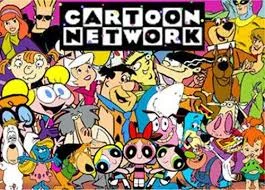
Cartoons and animated series have been a major part of people’s childhoods. Especially for the millennial generation, Cartoon Network, Sonix, and Nickelodeon have not been just a memory. It has redefined their childhood and early teenage years. These older cartoons have shaped their personality to a greater extent. Be it Johnny Bravo, Ed Edd and Eddy, Courage the Cowardly Dog, Tom & Jerry, Scooby Doo, Chip Tales, Pokémon, Dexter’s Laboratory, Powerpuff Girls, Samurai Jack, and more. These cartoons, their sequences, their series, their dialogues, and even the title music are enough to bring back the nostalgia.
However, many of the now adult millennials strongly feel that the older cartoons and animations these days have greatly changed and don’t find them appealing or engrossing anymore. Be it the storytelling, characters, or even the music, it is loud and more electronic or robotic than the older ones. The very essence of imagination and connectivity with child psychology has transformed alarmingly. The earlier cartoons were more adventurous, educational, and had human input in them. But now the AI and advanced CGI have made cartoons more realistic but less appealing.
How did it all start?
Storytelling using non-human and picture-based imagery has been around for more than 5000 years. Civilisations like the Indus Valley, Sumerian, Chinese, and even the Egyptians used Pictographical or puppet based mediums to tell and portray a story. This has evolved a lot after the introduction of films and industrial devices. The bioscope and motion pictures helped people to get a medium of great entertainment. By 1883, projections or the superimposed images on celluloid films were presented, which paved the path of animated cartoon characters.
In 1910, Fantasmagorie was released, which was the first hand-drawn cartoon film with a dedicated storyline and music. In late 1910, John Randalph and Earl Hurd patented the cel animation technique, which became the foundation for the animated cartoons in the coming century.
In 1918, Steamboat Willie by Walt Disney’s Disney Studio featuring Mickey Mouse and Minnie Mouse paved the foundation of animated movies and aesthetic storytelling through animation. The movie was the first film with synchronised sound and turned out to be an immense success. Looking at the success of the movie and its character, the iconic Mickey Mouse, more characters were introduced at the Disney Studio, like Donald Duck and Goofy. Many other studios too identified the potential in animated movies and produced animated films like Paramount released Popeye, Bimbo, and Casper the Friendly Ghost, Warner Bros. released Looney Tunes, Bugs Bunny & Friends, Daffy Duck, MGM studio released Tom & Jerry, and United Studios came up with Pink Panther.
What and where did it go wrong?
The older cartoons had an essence that was a great driving factor for the kids, young adults, and the elderly audience alike. The modern-day cartoons are missing that factor to a greater extent. As viewers are evolving and the technology has been digitalised with CGI and VFX, animation and cartoon movies have gotten better and more entertaining.
Over the period of time, many companies like Disney, Pixar, and DreamWorks started producing movies that not only created a new genre but also history by winning accolades like Oscars and Academy Awards. Many celebrated stars like Angelina Jolie, Jack Black, Jackie Chan, and Robin Williams lend their voice overs too many iconic cartoon characters. This marked a major success in the history of animated movies.
However, things began to change post 2000. Stiff competition, copyright, and the inclusion of CGI to create live-action movies affected the market of animated movies. Studios like Sony, Marvel, and DC collaborated with Universal and Paramount Studios to create movies on comic characters and superheroes like Spider-Man, Fantastic Four, Batman, and Iron Man. This impacted the market of animated movies on a greater scale. Also, the merchandise related to these characters was a very big and lucrative factor for kids. Also, animated studios require a longer time period to produce an animated movie as compared to real-life artists and celebrities. In such a situation, animation studios and illustrators suffered a major setback.
Besides this, one of the major cartoon channels on TV, Cartoon Network, was facing financial crunches, affecting the viewership of animated movies and cartoon content. It was later shut down in August 2024, marking the end of an era. Though many cartoon channels emerged and had many new series launched, none could match the aura and fan following of cartoons broadcast on Cartoon Network.
The new generation of cartoons did not gain much of the fan following, making it very different for the millennials and previous generation viewers. Also, Gen Z and Gen Alpha do not exhibit that mania-level enthusiasm for the new cartoon series and movies. Also, the fast pace, loud music, and bright use of visual imagery are also major factors that have caused a sense of dissatisfaction among the older generation and the OG lovers of cartoons and animation movies.
Future trends that will transform the future of animation
With the introduction of AI, and advanced graphical capabilities, the hope of improvement in the level of designing, compilation of the clips, and their final presentation is to be observed. In addition to this, many studios like Pixar, Dreamworks, and Disney are still working on the development of animated movies with great dialogue, superior storyline, and relatable character development. The best examples in recent times have been Toy Story, Cars, Kung Fu Panda, and The Smurfs. Many studios are also developing video game characters for animated movies like Angry Birds and Sonic the Hedgehog.
Also Read: Why are the cities so hot now in India? The reason and the best plants to tackle this issue.
Such developments have been a positive sign and have affected the development of animated movies in the future. In addition to this, many studios like Universal, Warner Bros, and Paramount are looking forward to the development of many animated movie franchises and live-action movie adaptations of video games. This has generated a sense of hope and makes the future of animations and cartoon movies more promising.
Frequently Asked Questions (FAQs)
Q1. Why do millennials feel nostalgic about older cartoons?
Older cartoons like those on Cartoon Network, Sonic, and Nickelodeon are remembered for their storytelling, character depth, and music, which significantly shaped the personalities and childhoods of the millennial generation.
Q2. When did modern animation begin?
Modern animated cartoon characters trace their roots back to the late 19th century, with the first hand-drawn cartoon film, Fantasmagorie, released in 1910 and Steamboat Willie in 1918.
Q3. Why are some viewers critical of modern cartoons?
Critics often find modern cartoons too loud, overly reliant on electronic or robotic elements, and lacking the adventurous and human-centric essence found in earlier animation.
Q4. What caused the decline of traditional animated TV channels?
The rise of stiff competition, the shift toward CGI-heavy live-action superhero movies, merchandise-focused strategies, and financial struggles led to a decline in traditional animated channels, with Cartoon Network notably shutting down in August 2024.
Q5. What is the future outlook for the animation industry?
The future remains promising as studios integrate AI and advanced graphics with strong storytelling, while continuing to adapt popular video game characters and developing major movie franchises.