Bollywood controversies often arrive with glitter, hashtags, dramatic screenshots, and enough online commentary to power an entire news cycle. But every once in a while, a debate breaks out that goes beyond celebrity gossip and enters a more emotional cultural territory. That is exactly what happened after a dance sequence featuring Ananya Panday’s Bhartnatyam fusion in Chand Mera Dil went viral online.
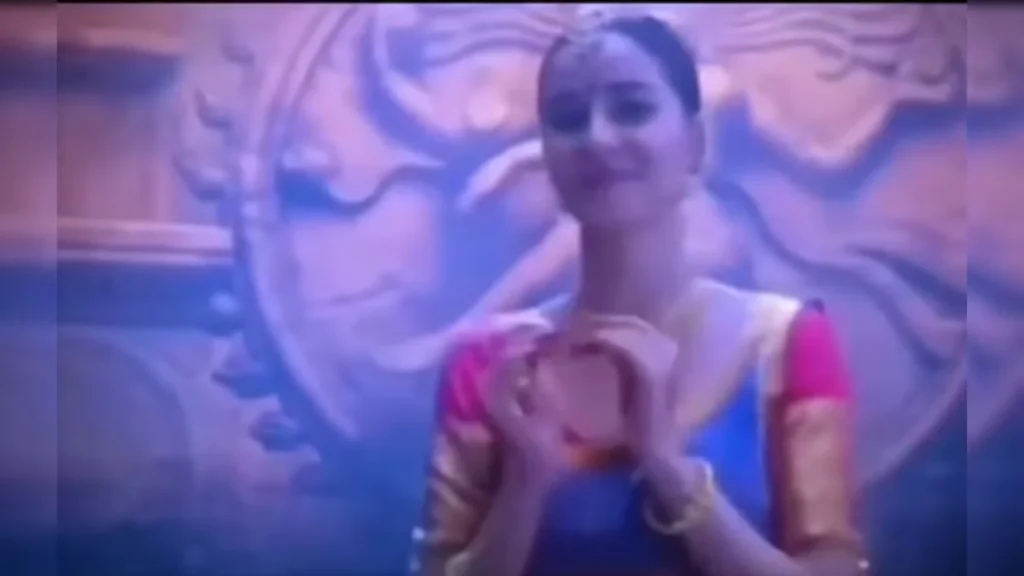
The sequence, described as a Bharatnatyam fusion performance, triggered intense criticism across social media platforms. Viewers mocked the choreography, questioned the authenticity of the performance, and accused the film of reducing a respected classical dance form into a flashy cinematic aesthetic. Some reactions were humorous, others were harsh, and many reflected a larger concern about how traditional Indian art forms are portrayed in mainstream entertainment.
What initially looked like another viral Bollywood moment soon evolved into a wider cultural conversation. Is fusion dance a legitimate form of creative experimentation? Should classical arts remain untouched by commercial cinema? And most importantly, where should filmmakers draw the line between reinvention and disrespect? The answers are far more layered than a trending hashtag.
What Exactly Happened In Chand Mera Dil?
Ananya Panday’s Bhartnatyam controversy began after clips from Chand Mera Dil started circulating online shortly after the film’s release. In one of the scenes, Ananya Panday performs a dance routine inspired by Bharatnatyam during what appears to be a college or stage performance setting.
The choreography mixed classical Bharatnatyam-inspired hand gestures, expressions, and costumes with modern cinematic dance movements and contemporary styling. While fusion dance is not new in Bollywood, many viewers felt this particular execution lacked the discipline and structure associated with Bharatnatyam.
Within hours, social media users began posting criticism, memes, and sarcastic commentary. The clip spread rapidly across X, Instagram, Reddit, and YouTube Shorts, transforming the performance into one of the internet’s most discussed entertainment topics of the week.
Several viewers argued that the dance looked less like Bharatnatyam and more like a heavily commercialised interpretation loosely borrowing from the classical form. Others criticised the posture, mudras, facial expressions, and footwork, saying the sequence failed to reflect the technical precision that defines Bharatnatyam.
For many trained dancers and classical art enthusiasts, the issue was not experimentation itself. The frustration came from what they believed was a superficial representation without adequate understanding of the art form’s depth.
Why Bharatnatyam Holds Such Cultural Importance
To understand why the backlash became so intense, it is important to understand Bharatnatyam itself. Bharatnatyam is one of India’s oldest and most respected classical dance traditions. Originating in Tamil Nadu, the dance form carries centuries of cultural, spiritual, and artistic history. It is known for its intricate footwork, geometric body alignment, expressive storytelling, symbolic hand gestures, and rhythmic discipline.
For practitioners, Bharatnatyam is not simply a performance style. It is often treated as a deeply immersive art practice requiring years of rigorous training. Dancers spend years learning posture control, rhythm cycles, expressions known as abhinaya, and coordination between movement and music.
Because of this emotional and cultural connection, many classical dancers feel strongly protective of the form. When mainstream cinema uses Bharatnatyam merely as a visual flavour without preserving its technical essence, criticism tends to follow quickly.
This sensitivity is not unique to Bhartanatyam alone. Similar debates have occurred around Kathak, Odissi, Kuchipudi, and other classical traditions whenever commercial entertainment adapts them in exaggerated or diluted ways. In this case, many viewers believed the performance crossed from “fusion” into “misrepresentation.”
Ananya Panday’s Bhartnatyam And The Social Media Storm
The internet reacted with its usual combination of outrage, comedy, exaggeration, and meme warfare to Ananya Panday’s Bhartnatyam. Within hours, clips from the performance became viral templates for criticism. One of the most widely shared comments joked that Bharatnatyam survived for over two thousand years only to be “destroyed” by one Bollywood sequence.
Another user wrote that watching the performance felt like “blood coming from my eyes,” a phrase that quickly became attached to the controversy across platforms. Memes compared the dance to school annual functions, wedding sangeet performances, and parody skits. Some posts sarcastically claimed that choreography standards in Bollywood had collapsed entirely.
At the same time, many users defended Ananya Panday personally, arguing that actors perform what directors and choreographers design for them. According to this perspective, the criticism should have been directed more toward the creative team than toward the actor alone.
The internet, however, rarely operates with moderation. As the criticism intensified, the debate became increasingly polarised. One side saw the sequence as disrespectful to classical arts. The other viewed the backlash as unnecessarily aggressive and elitist. The result was a classic social media cyclone where art criticism, humour, celebrity culture, and outrage collided in one chaotic digital arena.
Anita R Ratnam’s Remarks Added Weight To The Debate
The controversy gained additional seriousness after respected classical dancer and choreographer Anita R Ratnam publicly criticised the sequence. Ratnam reportedly stated that Bharatnatyam is built on technique, control, geometry, musicality, and emotional depth. Her comments resonated strongly within classical dance communities because they reflected concerns many practitioners already shared online.
When trained artists critique a mainstream performance, the conversation often shifts from internet trolling to cultural discussion. Ratnam’s remarks gave legitimacy to arguments that the sequence lacked proper grounding in the classical form it was referencing.
However, even within dance circles, opinions were not entirely unified. Some artists argued that fusion work naturally modifies traditional rules and should not always be judged through strict classical expectations. Others maintained that fusion still requires respect and understanding of the original form.
This divide revealed something important: the debate was no longer only about Ananya Panday or one movie scene. It had become a conversation about how India negotiates tradition in an era dominated by viral content and cinematic spectacle.
Bollywood’s Long Relationship With Classical Dance
The controversy also reopened a larger discussion about Bollywood’s complicated history with Indian classical dance forms. Hindi cinema has frequently borrowed from Bharatnatyam and other classical traditions for decades. Legendary performers like Vyjayanthimala, Hema Malini, and Madhuri Dixit brought classical training into mainstream cinema with grace and technical skill.
Songs from older Bollywood films often balanced cinematic entertainment with genuine respect for classical movement vocabulary. Even commercial dance numbers retained a visible understanding of rhythm and form.
Over time, however, Bollywood choreography evolved toward faster cuts, spectacle-driven staging, and social-media-friendly visual hooks. Dance sequences increasingly prioritised virality over technical refinement.
This shift is partly influenced by changing audience habits. Short-form video culture rewards instantly catchy visuals rather than detailed artistry. In such an environment, classical forms are often simplified, glamorised, or merged into hybrid choreography styles designed for mass appeal. The Chand Mera Dil controversy exposed the tension between these two worlds. One values accessibility and entertainment. The other values discipline, authenticity, and preservation.
Ananya Panday’s Bhartnatyam Fusion Dance Being Unfairly Judged?
While criticism dominated online discussions, another group of viewers argued that the outrage may have been excessive. Supporters pointed out that the sequence was presented as a fusion dance rather than pure Bharatnatyam. Fusion art forms, by definition, blend styles and experiment with structure. According to this argument, expecting strict classical purity from a commercial Bollywood performance misses the point entirely.
Some viewers also questioned whether audiences selectively criticise certain actors more harshly than others. They argued that social media often amplifies mockery around younger Bollywood celebrities because viral criticism generates engagement. Others defended artistic experimentation itself. They argued that classical art forms evolve over time and that innovation should not automatically be treated as disrespect.
This side of the debate raises a complicated question. If classical traditions are never adapted or modernised, do they risk becoming inaccessible to younger audiences? But if adaptation becomes too detached from the original form, does it lose authenticity altogether? There is no universally accepted answer. That is precisely why debates like this become so emotionally charged.
The Pressure Of Performing Classical Arts On Screen
Performing classical dance on screen presents a unique challenge for actors. Unlike general film choreography, classical forms demand years of physical conditioning and theoretical understanding. Bharatnatyam involves posture precision, eye coordination, rhythmic accuracy, and emotional storytelling techniques that cannot easily be mastered within short training workshops.
Bollywood actors often undergo intensive preparation for such roles, but audiences can usually distinguish between trained classical dancers and performers learning the style for cinematic purposes. This creates enormous pressure. If the actor performs too technically, the sequence may lose mainstream appeal. If the performance becomes too commercialised, classical audiences may reject it.
Actors attempting classical dance sequences therefore, walk a narrow bridge suspended between authenticity and entertainment, with social media waiting below like a digital jury armed with memes and reaction GIFs.
How Viral Culture Intensifies Every Controversy
One reason this debate became so massive is that modern internet culture thrives on quick emotional reactions. Platforms like Instagram Reels, X, and TikTok-style short videos reward dramatic opinions and shareable humour. A nuanced discussion about choreography rarely goes viral. A savage one-line insult usually does.
As a result, controversies become exaggerated at lightning speed. Users who may not even follow Bharatnatyam or classical dance join the discussion because the meme itself becomes entertaining. This creates a strange ecosystem where cultural criticism and internet comedy merge together. Serious artistic concerns can sometimes get buried under sarcasm and trolling.
At the same time, viral backlash also reflects genuine audience sentiment. When thousands of people react strongly to a performance, it suggests the content touched a cultural nerve. In the case of Chand Mera Dil, the backlash revealed how emotionally connected many Indians still feel toward classical traditions, even within an entertainment-first digital age.
Ananya Panday’s Bhartnatyam, What This Means For Bollywood Going Forward
The controversy surrounding Ananya Panday’s dance sequence may eventually fade from trending pages, but the larger discussion will likely continue. Bollywood today operates in an environment where audiences are more vocal, informed, and digitally connected than ever before. Viewers no longer consume films passively. They analyse choreography, costumes, dialogues, cultural references, and historical representation in real time.
For filmmakers, this means cultural adaptation now carries greater scrutiny. Borrowing from classical traditions requires not only visual aesthetics but also sensitivity and understanding. At the same time, cinema cannot remain frozen in artistic rigidity. Fusion and experimentation are natural parts of creative evolution.
The challenge lies in balancing innovation with respect. Perhaps the strongest lesson from this controversy is that audiences can recognise when an art form feels deeply understood versus when it feels used merely as decoration.
In Conclusion
The backlash against Ananya Panday’s Bharatnatyam fusion sequence in Chand Mera Dil became much more than a celebrity controversy. It turned into a reflection of India’s ongoing cultural conversation about tradition, modernity, entertainment, and artistic responsibility.
For some viewers, the performance represented careless commercialisation of a sacred classical form. For others, it was simply a cinematic fusion routine unfairly dragged into internet outrage culture.
Both perspectives reveal something important about contemporary Indian entertainment. Audiences today want creativity, but they also want cultural awareness. They are open to experimentation, but not at the cost of authenticity.
In the middle of this debate stands Bollywood itself, constantly balancing spectacle with sensitivity, virality with craftsmanship, and reinvention with heritage. And somewhere between a classical mudra and a trending meme lies the complicated future of art in the age of algorithms.
Frequently Asked Questions (FAQs)
1. Why is Ananya Panday being criticised for the dance sequence?
Many viewers felt her Bharatnatyam fusion performance in Chand Mera Dil lacked the technical precision and authenticity associated with the classical dance form.
2. Was the performance pure Bharatnatyam?
No. The sequence was presented as a fusion performance combining classical-inspired elements with modern choreography.
3. Who criticised the dance publicly?
Classical dancer and choreographer Anita R Ratnam publicly criticised the sequence and discussed the importance of technique and discipline in Bharatnatyam.
4. What is Bharatnatyam?
Bharatnatyam is one of India’s oldest classical dance forms originating from Tamil Nadu, known for storytelling, rhythm, expressions, and precise movements.
5. Has Bollywood faced similar criticism before?
Yes. Bollywood has often faced debates over how it adapts and commercialises Indian classical art forms for mainstream entertainment.