
For many Indian bank customers, it starts with a small and almost forgettable SMS. “₹20 debited from your account.” At first glance, it looks harmless. Some people ignore it because the amount is too small to question. Others assume it must be a normal bank fee. But then something unusual happens. The same person notices a similar deduction from another bank account. Sometimes even a third one. Suddenly, the question becomes bigger than ₹20. Indian Banks Deducting ₹20?
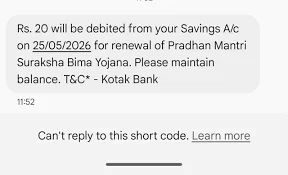
Why are multiple banks deducting money for the same insurance scheme from the same person? And if only one insurance claim can eventually be used, why are customers being charged repeatedly across different accounts?
This growing confusion has pushed many people to closely examine schemes like the Pradhan Mantri Jeevan Jyoti Bima Yojana, commonly known as PMJJBY. While the scheme itself was introduced with a positive social welfare objective, the way it operates through India’s banking system has created frustration, mistrust, and larger questions about transparency in modern banking.
What Is Pradhan Mantri Jeevan Jyoti Bima Yojana (PMJJBY)?
Pradhan Mantri Jeevan Jyoti Bima Yojana (PMJJBY) is a government-backed life insurance scheme launched in 2015. It was designed to make life insurance affordable for ordinary citizens, especially low-income households.
Under the scheme:
- People between 18 and 50 years can enroll
- A yearly premium is deducted automatically from a bank account
- In case of the insured person’s death, the nominee receives insurance coverage
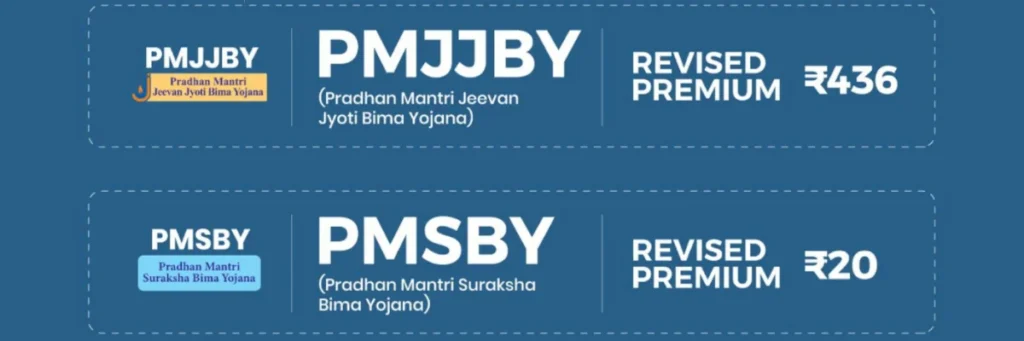
The premium amount has changed over the years. Earlier, many people saw deductions around ₹20 or ₹330, while recent premiums are higher. However, because the amount is relatively small, many customers still do not pay much attention when it gets debited.
That small size is exactly what makes the issue powerful. A deduction tiny enough to escape attention can quietly spread across millions of accounts without triggering widespread resistance.
Why Are Multiple Banks Charging The Same Person?
Technically, one individual is supposed to have only one PMJJBY policy. The scheme is linked to the individual, not to the number of bank accounts they own.
However, India’s banking system is highly fragmented. A person may have:
- one salary account,
- one savings account,
- one Jan Dhan account,
- one joint family account,
- and another account opened for investments or digital payments.
Each bank operates independently. If a customer unknowingly consents to PMJJBY enrollment at different banks, each institution may activate the policy separately and deduct premiums separately.
This creates the strange situation many people are now discovering:
one citizen, multiple deductions. The problem becomes more confusing because customers often do not remember giving consent at all.
Did Customers Actually Agree To Indian Banks Deducting ₹20?
This is where the debate becomes controversial. Banks generally claim that enrollment happens only after customer consent. In many cases, that is technically true. But critics argue that the consent process is often buried inside:
- lengthy forms,
- bundled banking documents,
- pre-ticked options,
- mobile banking approvals,
- debit card paperwork,
- or fast verbal confirmations during account opening.
Many customers sign forms without carefully reading every section. Others open accounts in crowded branches where paperwork moves rapidly. Sometimes, relationship managers promote insurance schemes alongside account services without clearly explaining long-term auto-debit implications.
As a result, customers may unknowingly activate insurance policies across multiple accounts. Legally, banks may still possess “consent.” But ethically, many people feel the process lacks meaningful transparency.
The ₹20 Psychology
If the deduction were ₹2,000, customers would immediately call their bank. But ₹20 operates differently. It sits in a psychological blind spot. Small enough to ignore. Frequent enough to multiply. Invisible enough to scale.
This is not unique to India. Around the world, subscription economies thrive on low-value recurring charges people rarely monitor carefully. Streaming platforms, app stores, cloud services, and membership programs all benefit from this behaviour.
In banking, the effect becomes even stronger because customers naturally trust financial institutions. A tiny deduction repeated across millions of users becomes a massive revenue stream flowing silently through the financial system.
That is why this debate resonates emotionally with so many people. It is not only about the amount. It is about the feeling of losing control over one’s own account.
Can Someone Claim Multiple Insurance Benefits?
This is another major source of confusion. If one person has PMJJBY linked to multiple bank accounts, it does not necessarily mean multiple insurance payouts will be approved later. The scheme is designed for single coverage per person.
This means:
- Multiple premiums may get deducted,
- But multiple claims may not be honoured.
In practical terms, some duplicate policies may become useless during claim settlement disputes. That possibility has alarmed many customers. They question why the system allows duplicate enrollments if the final benefit remains restricted.
Critics argue that banks should have stronger verification systems linked to Aadhaar or PAN details to prevent duplicate activations automatically.
Indian Banks Deducting ₹20: Is This A Scam?
Calling it a scam would be legally inaccurate. Pradhan Mantri Jeevan Jyoti Bima Yojana (PMJJBY) is a legitimate government insurance scheme. Millions of Indians genuinely benefit from it, especially families that previously had no financial protection at all. However, critics say the issue lies in the execution model.
The combination of:
- automatic deductions,
- low customer awareness,
- fragmented banking databases,
- and weak communication
creates a system where customers often feel trapped inside processes they barely understand. The anger grows because banks appear highly efficient when deducting premiums but far less proactive in explaining policies clearly. For many people, that imbalance creates distrust.
What This Reveals About Indian Banking
The controversy reflects a larger transformation happening inside India’s financial system. Banking today is no longer just about saving money. Banks have evolved into financial marketplaces selling:
- insurance,
- investment products,
- mutual funds,
- credit cards,
- loans,
- and subscription-like services.
Employees are frequently given sales targets tied to these products. Insurance enrollment sometimes becomes part of branch performance metrics. This creates a subtle shift in the customer-bank relationship.
Traditionally, customers saw banks as secure vaults for money. Today, many banks operate more like financial supermarkets constantly pushing additional products. That commercialisation is not inherently wrong. But it becomes problematic when customers do not fully understand what they are signing up for. The Pradhan Mantri Jeevan Jyoti Bima Yojana (PMJJBY) confusion is, in many ways, a symptom of that larger shift.
Why This Debate Matters Beyond ₹20
At first glance, arguing over ₹20 may sound trivial. But public trust in financial systems is built on transparency, not transaction size. People become uneasy when:
- deductions happen automatically,
- consent feels unclear,
- and duplicate charges appear across institutions.
The issue also highlights a growing digital-era challenge. As banking becomes increasingly automated, customers may lose visibility over recurring financial permissions they once controlled manually.
India’s rapid financial digitisation has undoubtedly expanded access and convenience. But speed sometimes outpaces awareness. Millions of first-generation digital banking users are still learning how auto-debits, insurance links, and recurring authorisations actually work. That gap creates confusion, vulnerability, and suspicion.
What Customers Should Do
People concerned about duplicate PMJJBY deductions should:
- check all bank statements carefully,
- review yearly auto-debit entries,
- ask banks for enrollment records,
- cancel duplicate policies,
- and keep only one active policy.
Customers should also regularly monitor SMS alerts instead of ignoring small deductions. Tiny recurring amounts may seem insignificant individually, but over the years they accumulate into meaningful financial leakage. More importantly, awareness restores control.
Also Read: What Is Cockroach Janta Party? How Did It Start, Who Is Behind It, And What Is The Real Story?
In Conclusion
The debate around PMJJBY deductions is not simply about ₹20 disappearing from a savings account. It reflects a deeper tension inside modern banking. Customers appreciate affordable insurance and financial inclusion. But they also expect transparency, clarity, and genuine consent.
When one person gets charged across multiple bank accounts for essentially the same scheme, the system begins to feel less like social protection and more like an automated maze of silent deductions. India’s banking revolution has brought extraordinary convenience to millions. Yet convenience without understanding can quickly turn into confusion.
Also Read: India is Number One in Population: Good or Bad? Let’s Break It Down!
And perhaps that is why this issue resonates so strongly online. Because somewhere between financial inclusion and financial automation, many people are asking the same uncomfortable question: If small deductions can move unnoticed through millions of accounts every year, how much of modern banking operates quietly in the background without customers truly realising it?
Frequently Asked Questions (FAQs)
1. What is Pradhan Mantri Jeevan Jyoti Bima Yojana (PMJJBY)?
Pradhan Mantri Jeevan Jyoti Bima Yojana (PMJJBY) is a government-backed life insurance scheme offering financial coverage at a low yearly premium.
2. Why am I being charged from multiple bank accounts?
You may have unknowingly enrolled through different banks linked to separate accounts.
3. Can I claim insurance from all accounts together?
Usually, only one valid claim is allowed per person under the scheme.
4. Is the ₹20 deduction legal?
Yes, if customer consent was recorded by the bank during enrollment.
5. How can I stop duplicate deductions?
Contact your banks and cancel extra Pradhan Mantri Jeevan Jyoti Bima Yojana (PMJJBY) enrollments, keeping only one active policy.