For decades, UFO discussions lived in the smoky backrooms of conspiracy culture. Grainy photographs. Desert whispers. Late-night radio hosts speaking in static-filled suspense. Then something unusual happened: the United States government itself began opening the vault.
The phrase “us released ufo files” exploded across the internet after the Pentagon confirmed that several leaked videos showing unidentified aerial objects were authentic. Suddenly, what was once dismissed as fantasy entered congressional hearings, military investigations, and national security briefings.
And the deeper one digs into those files, reports, and testimonies, the stranger the story becomes. Because hidden beneath bureaucratic language and heavily redacted documents lies a puzzle filled with radar anomalies, objects outrunning fighter jets, pilots describing aircraft with no visible engines, and officials admitting there are encounters they still cannot explain.
This is not merely a story about aliens. It is a story about secrecy, surveillance, military fear, and humanity staring into a sky that may not be as empty as we once believed.
When The US Released UFO Files, Everything Changed
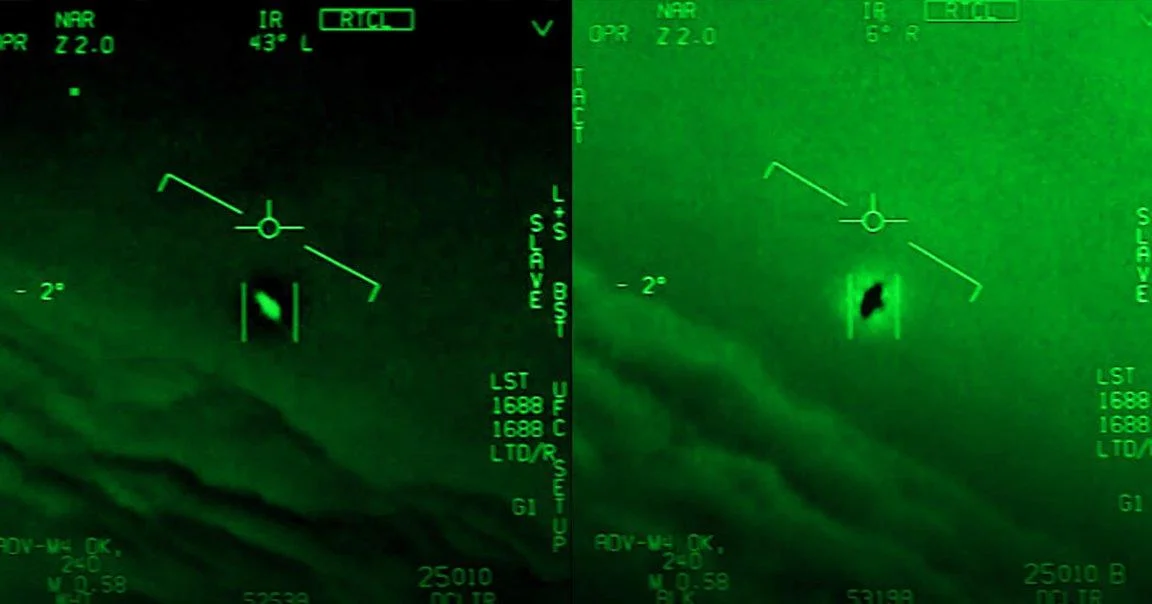
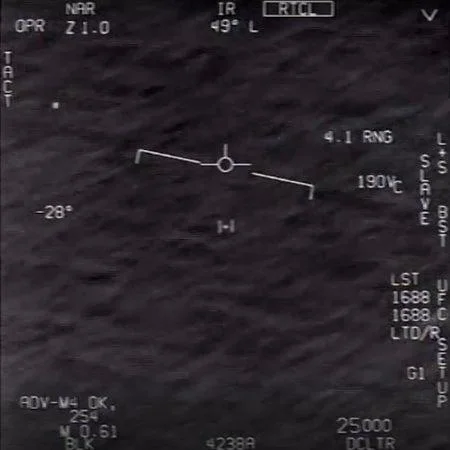
The modern UFO storm truly ignited in 2020 when the U.S. Department of Defense officially released three military videos already circulating online for years.
The clips became legendary almost overnight:
- “FLIR1” or the “Tic Tac” encounter
- “Gimbal”
- “GoFast”
In each video, trained Navy pilots tracked airborne objects displaying movements that appeared extraordinary. One object accelerated rapidly without visible propulsion. Another rotated mid-air while maintaining speed against strong winds.
The Pentagon’s confirmation stunned the public. Not because the videos proved extraterrestrial life, but because the government acknowledged the objects were genuinely unidentified. That single admission cracked open a door Washington had kept bolted shut for generations.
The Tic Tac Incident Still Haunts Investigators
Among all the cases linked to the us released ufo files, none is more unsettling than the 2004 “Tic Tac” encounter near the California coast. Pilots from the USS Nimitz carrier strike group encountered an object shaped like a smooth white capsule. No wings. No exhaust trails. No visible engines.
Commander David Fravor later described the object moving “like a ping pong ball” before accelerating away at astonishing speed. Radar operators had reportedly tracked unusual objects for days before the encounter. The craft seemed capable of descending tens of thousands of feet within seconds.
To believers, it sounded like technology centuries ahead of modern aviation. To skeptics, it sounded impossible. And perhaps that is precisely why the case refuses to disappear.
Congress Entered The UFO Conversation
The real shockwave came when UFOs stopped being internet folklore and entered Capitol Hill. In recent years, the United States Congress held multiple hearings on UAPs, the government’s new term for UFOs: Unidentified Anomalous Phenomena.
Officials admitted hundreds of sightings had been recorded by military personnel. Even more surprising, many remained unresolved. The government insisted there was no confirmed evidence of extraterrestrial life. Yet officials also admitted they could not fully explain several incidents involving restricted military airspace.
For critics, this contradiction created the perfect storm. If these objects are not alien, then whose technology is it? And if the government truly does not know, why are trained military systems failing to identify them? Those questions transformed UFOs from entertainment into a national security issue.
The Rise Of AARO And America’s Hunt For Answers
To handle the growing pressure, the Pentagon established the All-domain Anomaly Resolution Office, better known as AARO. Its mission sounded almost cinematic:
Investigate strange objects detected in the sky, underwater, and even in space.
The office reviewed hundreds of reports. Some cases were eventually linked to balloons, drones, optical distortions, or sensor errors.
But not all.
A small number of incidents reportedly lacked sufficient data for explanation.
That lingering uncertainty became fuel for public obsession. The mystery survives in the gaps. Like a horror film where the monster is never fully revealed, ambiguity keeps the phenomenon alive.
The Whistleblower Who Intensified The Fire
In 2023, former intelligence officer David Grusch made explosive claims during public testimony. He alleged the U.S. government possessed secret programs involving recovered non-human craft.
No public evidence has yet confirmed these allegations. Still, the testimony ignited global headlines because Grusch claimed his information came from officials inside classified programs. The hearing felt less like science fiction and more like political theatre wrapped in Cold War paranoia.
Critics accused him of spreading unverified stories. Supporters argued whistleblowers rarely emerge without risk. The result was a cultural detonation. Searches for us released ufo files surged once again as millions tried separating evidence from myth.
NASA Entered The Mystery
Even NASA stepped into the debate.
Its independent UAP study concluded that most sightings likely have ordinary explanations, but the agency admitted better scientific data is needed.
That distinction matters.
NASA did not say all sightings were fake.
Instead, it argued humanity lacks sufficient information to reach definitive conclusions.
It is a subtle but important difference. One closes the case. The other leaves the cosmic curtain slightly open.
Project Blue Book: America’s Earlier UFO Obsession
Long before modern Pentagon disclosures, the U.S. Air Force ran Project Blue Book between 1952 and 1969.
More than 12,000 UFO reports were investigated.
Most received ordinary explanations:
- Weather balloons
- Misidentified aircraft
- Atmospheric phenomena
- Astronomical objects
Yet hundreds remained unexplained even after investigation.
That unresolved residue became fertile ground for conspiracy theories that continue decades later.
For many Americans, the phrase “us released ufo files” is not about one event. It represents a long-running suspicion that the government knows more than it publicly admits.
Why People Are Fascinated By UFO Files
UFO stories survive because they sit at the intersection of fear and wonder.
They ask uncomfortable questions:
- Are humans technologically alone?
- Could governments hide world-changing discoveries?
- Are military systems vulnerable to unknown surveillance?
- Have we mistaken certainty for understanding?
The mystery also thrives because modern life feels hyper-documented. Nearly everything is recorded, tracked, streamed, and archived. Yet despite satellites, AI systems, military radars, and smartphones, some aerial phenomena still resist easy explanation.
That contradiction fascinates people.
In an age where maps cover nearly every inch of Earth, the sky remains psychologically untamed.
Also Read: Moon Landing and Aliens: Separating Fact from Fiction
So, Did The US Released UFO Files Reveal Aliens?
Not officially.
No released government document conclusively proves extraterrestrial life.
But the files did reveal something equally unsettling:
even the world’s most powerful military sometimes encounters objects it cannot immediately explain.
And perhaps that uncertainty is what keeps the story alive.
Because the human imagination rushes into unanswered spaces like water flooding cracks in stone.
Some see advanced enemy technology.
Some see bureaucratic confusion.
Some see evidence humanity is not alone.
The truth may ultimately be less dramatic than Hollywood hopes or more extraordinary than skeptics expect.
Until then, the released files remain suspended between disclosure and mystery, flickering like distant lights above a dark ocean.
And somewhere in the silence beyond radar screens and classified reports, the question still hovers:
What exactly have we been seeing?
Frequently Asked Questions (FAQs)
Q1. What are the “us released ufo files”?
They are declassified videos, reports, and documents released by the U.S. government related to UFOs or UAPs (Unidentified Anomalous Phenomena).
Q2. Did the US government confirm aliens?
No. The government confirmed some objects remain unidentified, but it has not confirmed extraterrestrial life.
Q3. What is the Tic Tac UFO incident?
It refers to a 2004 encounter where U.S. Navy pilots tracked a strange object moving in unusual ways near the USS Nimitz.
Q4. Why are UFOs now called UAPs?
Officials use the term UAP to reduce stigma and include objects seen in air, space, or underwater environments.
Q5. Are UFO investigations still happening?
Yes. The All-domain Anomaly Resolution Office and other agencies continue investigating unexplained sightings.